Definition of Price in Marketing and How It Works
The definition of price in marketing goes beyond the amount paid: see how a quote signals value, shapes bookings, and guides smarter pricing tests.
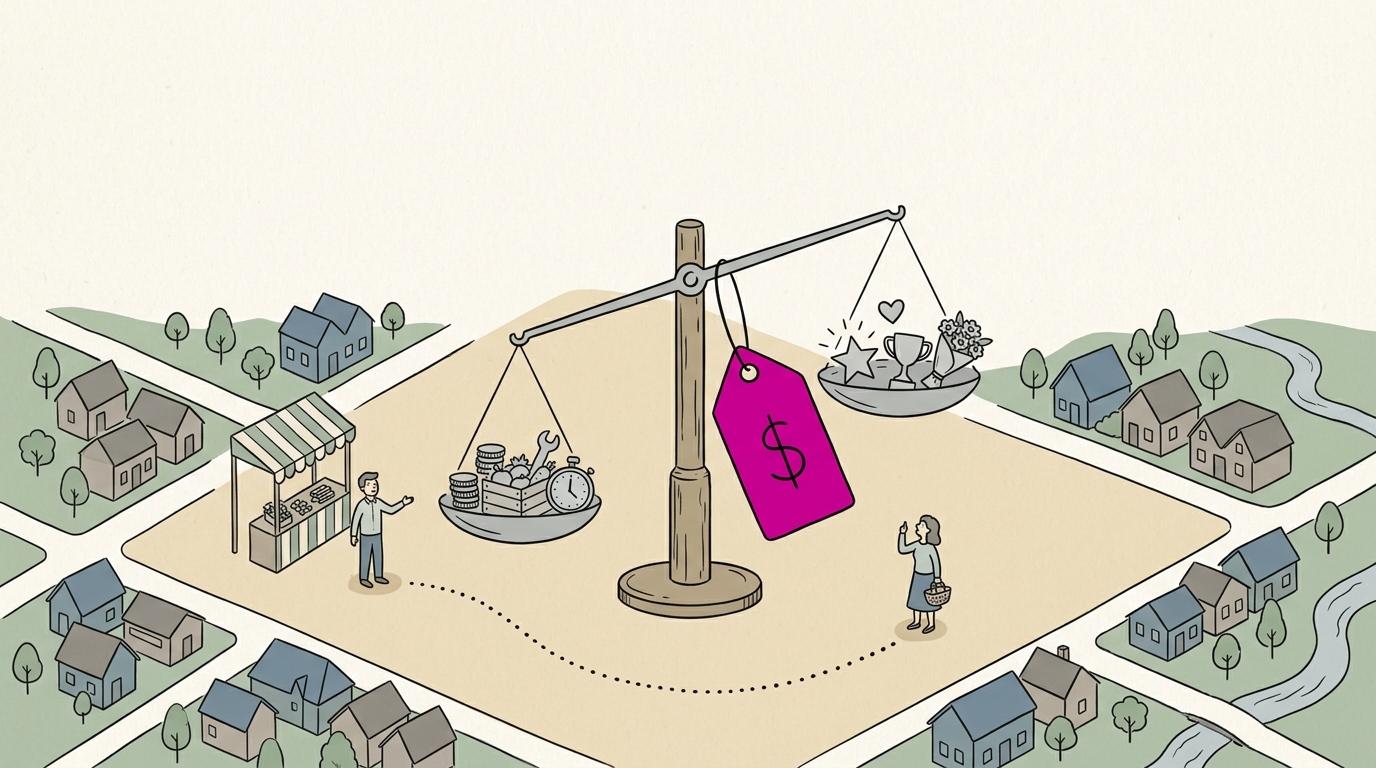
In marketing, price is the amount customers pay for a product or service, shaped by the offer, discounts, and payment options. Setting it means balancing delivery costs, customer willingness to pay, competitors, business goals, and the value customers perceive, while making charges clear and consistent with the rest of the marketing mix. A well-chosen price can cover costs, support profit, influence how customers judge quality, and help them decide whether to buy and return.
Think about a plumber’s quote for a leaky faucet. The number on the estimate tells you the cost, but it also signals how the plumber values their work and whether you’ll call again.
That’s what price does in marketing: it sends a message before the customer ever picks up the phone.
In plain terms, price is the amount a customer pays, and how you set it affects your profit, your reputation, and how many calls and bookings you get. It’s one of the four Ps (product, place, price, and promotion) in the marketing mix.
Definition of Price in Marketing and Pricing
Why do two shops down the street charge different prices for the same haircut?
What price means to customers
To customers, price is the amount they pay, the monetary value they hand over for a product or service. Discounts and payment options also shape what they end up paying.
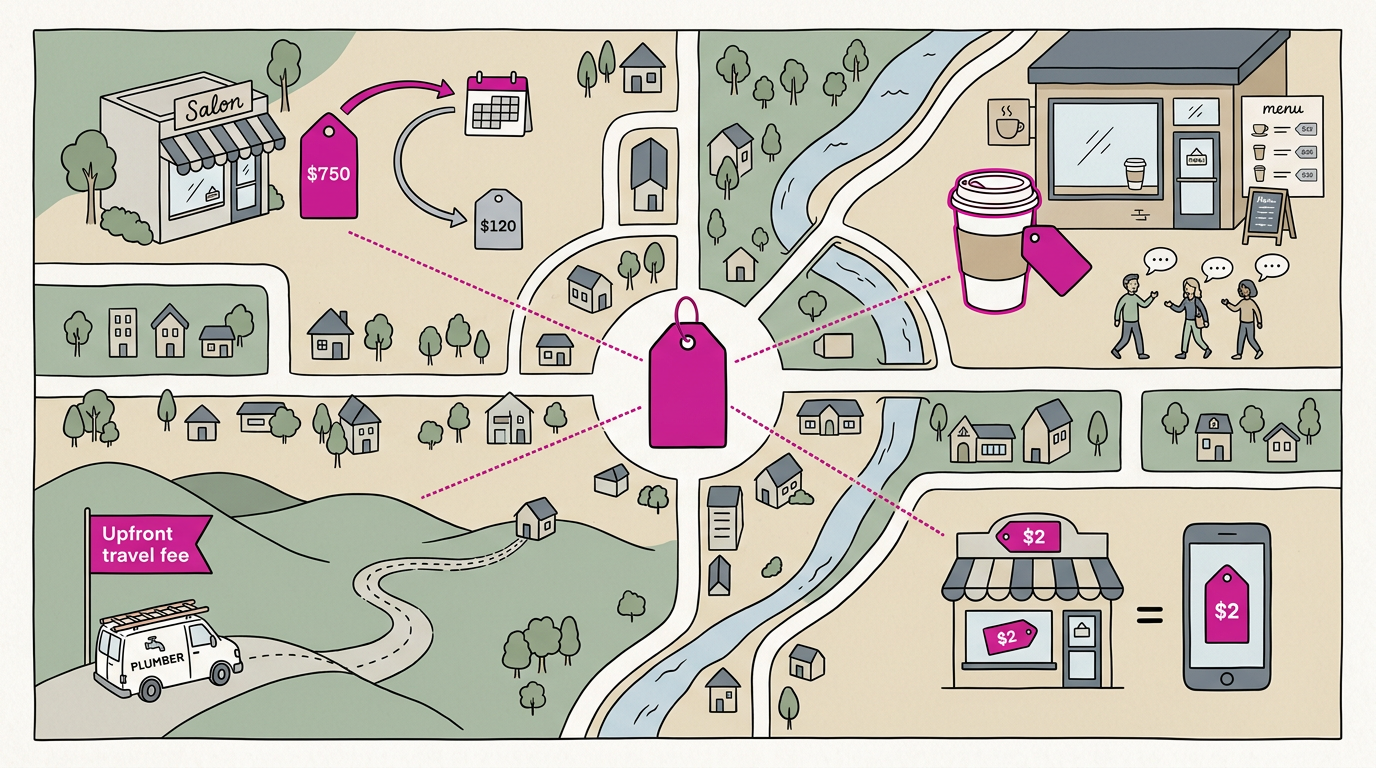
Think of a salon owner who offers a first-visit discount and lets clients split a bridal package into monthly payments. The discount gets a newcomer in the door, and the payment plan makes a bigger booking feel doable.
How price differs from cost
Price is what you charge, while cost is what it takes to deliver, including materials, labor, and overhead.
Sometimes a business sets price below cost on purpose. This is loss-leader pricing: selling one item at or below cost to draw customers in. A coffee shop might sell a plain bagel near cost, hoping for a latte sale.
Over the long run, though, your prices have to cover your costs. Otherwise, you’re just paying people to visit.
Software has a twist. A software-as-a-service (SaaS) company sells software by subscription, and while it’s growing, it may charge less than it costs to serve each customer.
That’s a deliberate exception, and it only works if prices eventually rise above cost.
What are the different types of pricing decisions?
Pricing is a set of connected choices, not one decision:
- Pricing process: the steps you follow each time you set or review a price.
- Pricing strategy: your overall approach, like competing on lowest price or on dependability.
- Pricing structure: how the total charge breaks down, such as a flat fee, an hourly rate, or a base fee plus add-ons.
- Pricing frameworks: the models and rules of thumb that guide the numbers.
Who owns this? Usually the owner makes the final call, often after hearing from the staff who talk to customers daily. In a larger company, a manager or team may hold that job. Either way, someone should own it on purpose.
What good pricing should achieve
Good pricing does three jobs at once. It balances profit and satisfaction, so you earn enough while customers feel they got fair value. It maximizes profitability and revenue over time.
And it reflects willingness to pay, meaning how much customers are truly prepared to spend. Hit all three, and your prices start working for you.
Where Price Fits in the Marketing Mix
Price never works alone. Here’s how it fits with the rest of your marketing.
How the 4Ps and 7Ps shape buying
Marketers rely on the marketing mix, a set of levers that shape buying. The classic four Ps are:
- Product: what you sell
- Price: what customers pay
- Place: where they get it
- Promotion: how they hear about you
Service businesses often add three more: people, processes, and evidence (your reviews and proof you deliver). Think of a dental office with a fair price but a receptionist who sounds rushed. Patients may simply book elsewhere.
Together, the mix drives buying decisions.
Why price matters so much
Price is about what you earn, not what you spend. According to Marketing-Orientated Pricing Strategies, price is the only component of the marketing mix that directly generates revenue, since all the others are sources of costs.
So a pricing change can lift your income without adding a new expense. Online selling has raised the stakes, too. Think of a customer comparing your tune-up price with a shop across town while still in your parking lot.
They’ve seen your price before they walk in.
How price works with the other Ps
- Product lifecycle: Prices can shift as a product matures. A salon might charge more for a new treatment, then adjust once it’s routine.
- Place: Geographic pricing means charging by location. A plumber’s travel fee for distant jobs, stated upfront, avoids invoice surprises.
- Promotion: A key-value item is one customers know well and use to judge your prices. Keep a coffee shop’s regular latte competitively priced, and customers give the rest of the menu the benefit of the doubt.
- Online vs. in-store: Keep prices aligned, or say why they differ upfront.
What Pricing Means for the Business
Price is what you charge, cost is what you spend to deliver, and value is what customers believe they’re getting. Keep them separate, since value is what turns a quote into a booking.
How pricing shapes profit and revenue
Price drives your bottom line. Price optimization is finding the sweet spot: high enough to cover costs and pay you fairly, low enough that the right customers still say yes. Too low and margins thin; too high and calls slow.
Picture a salon owner who hasn’t raised prices in years as supplies climb. Every booking leaves less for her.
How price shapes brand perception
A study on price-quality inference reports shoppers often treat price as a stand-in for quality, so a bargain can quietly suggest weaker work. A higher price can signal exclusivity.
Anchoring means judging a price against the first number seen, so a premium option listed beside your standard price makes that price feel fair.
Branding, sales copy, and marketing give customers a reason to pay more, so your price feels earned rather than arbitrary.
How price drives customer decisions
Price sensitivity is how much a small change in price affects whether someone buys. Willingness to pay is the most a customer will spend on what you offer. Transparent pricing builds trust, so post starting prices and what’s included.
Hidden costs deter buyers. Picture a plumber whose quote looks low until a trip fee appears on the bill. That customer won’t call back.
Price matters at every step:
- Discovery: your listing or site sets the first impression.
- Comparison: a clear quote beats a vague one.
- Booking: surprise fees at checkout lose the sale.
- Repeat visits: steady, fair pricing keeps regulars coming back.
Factors That Shape the Price You Set
Five pressures shape the number you set: costs, customers, rivals, goals, and perceived value. Here’s how to read each one before you quote.
Covering costs and finding your breakeven
- Fixed costs: stay the same whether you book one job or twenty, like rent.
- Variable costs: rise with each sale, like materials and card fees.
- Direct costs: trace to one job, like a plumber’s parts.
- Indirect costs: cover the whole operation, like the phone line.
Your breakeven point is the number of sales that cover every cost. Your cost structure, the mix of fixed and variable costs you carry, decides how much volume you need. Count your own labor hours too.
A plumber who prices only parts and fuel forgets his time, and that gap hides which jobs really pay.
Breakeven shows whether you can afford a price, not what the market will pay.
How customer demand affects your price
Your customers set the ceiling. Their target customer profile, including income and location, shows what they can spend.
A salon in a college town and one in a wealthy suburb serve very different budgets, so each should price for the people who actually book.
Buying behavior is how people shop: some compare online, some book by phone at lunch. Market segmentation groups customers with shared needs so each group gets a fitting price. Customer expectations, like same-day service, change how a quote lands.
How rivals shape your pricing
Direct competitors sell the same thing to the same customers. Indirect competitors solve the same problem differently, like a homeowner’s DIY fix. Customers carry a rough sense of local prices, so nearby quotes become their reference point.
A house cleaner facing two rivals at the same flat rate can compete on what they don’t advertise, like a same-week booking window. Seasons and local shifts change what people will pay, so watch trends, not just today’s rival prices.
Matching price to goals and growth stage
Growth focus accepts a thinner margin to win customers, while profit focus protects each sale. Pricing for growth now is different from pricing for profit later.
A new dog groomer might price lower to meet a market share objective: a bigger slice of local clients.
Your business model, whether one-time jobs or monthly plans, and your growth stage decide which price fits. Pick your goal first. Then set the number.
How perceived value and maturity affect price
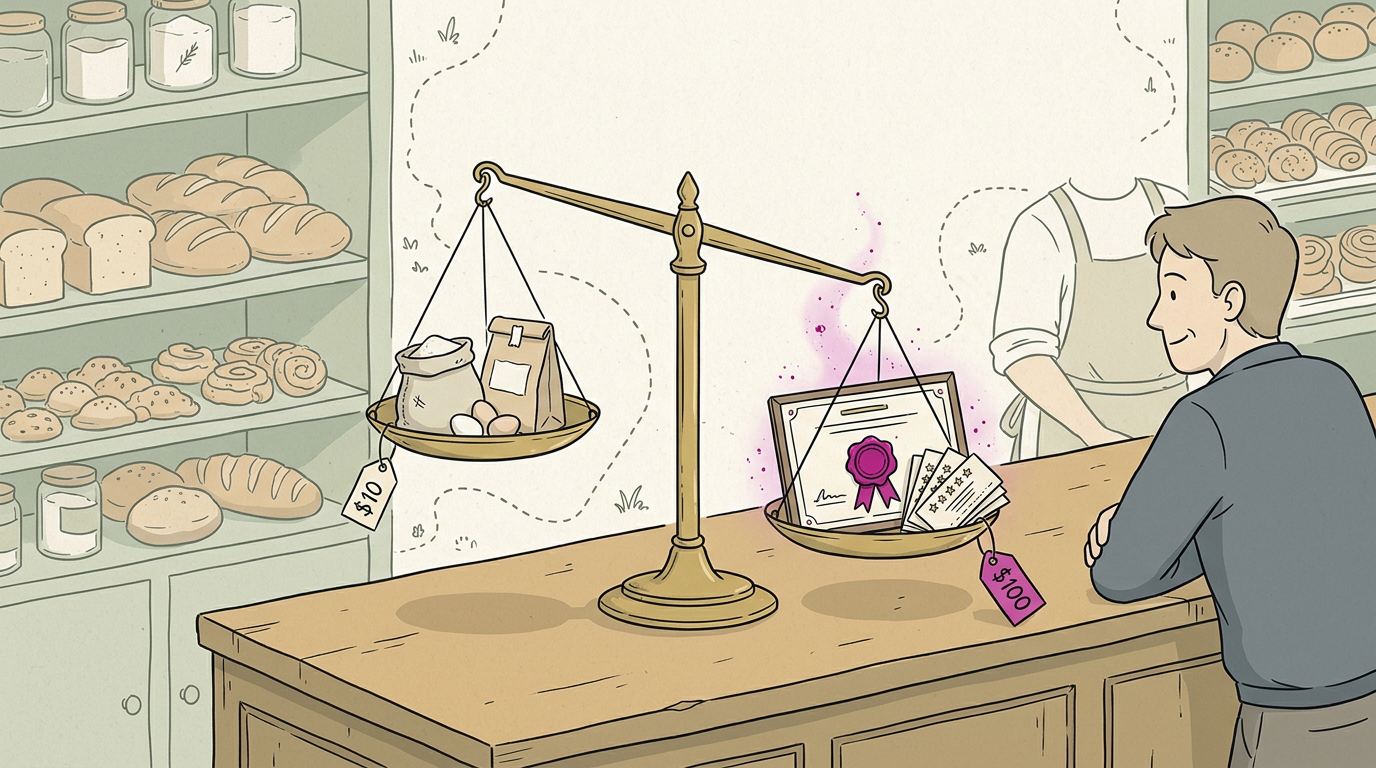
Differentiation is what sets you apart, like a written guarantee. Perceived value is what customers believe your work is worth, based on that edge and past reviews. A bakery with a written pickup guarantee can justify a higher price than one without it.
Market maturity describes how established your market is, and market acceptance shows whether customers embrace what you offer. Technical maturity shows how proven a method or tool is. A new tool may need a lower introductory price until people trust it.
Price the perceived value, not just your actual cost.
Pricing Terms and Formulas to Know
Pricing terms get tossed around a lot, so here’s what each one means and how to run the math.
How markup and margin differ
Markup is measured against cost, while margin is measured against price. A $60 yard sign that cost a sign shop $40 has a 50% markup but a 33% margin.
- Gross margin: what’s left after direct costs.
- Net margin: what’s left after rent, payroll, and software.
Full costing spreads overhead, like rent, across every item. Variable costing counts only costs that rise with each sale.
List, retail, and wholesale price levels
Four price levels play different roles:
- List price: the published starting point, often set by a manufacturer.
- Manufacturer’s suggested retail price (MSRP): the shelf price the maker recommends.
- Retail price: what your customer pays you directly.
- Wholesale price: what a reseller pays you, usually lower.
A candle maker might sell a jar for $24 at her booth and $12 to a boutique.
Calculating price elasticity and breakeven
Price elasticity of demand (PED) = % change in quantity sold ÷ % change in price.
High elasticity means sales swing on small price changes, while low elasticity means they hold steady. Elasticity varies by segment: a midnight emergency caller may barely flinch, while a price-shopping regular may leave.
Say weekly bookings fall from 20 to 16 after a 10% price rise. That’s a 20% drop, so PED is -20% ÷ 10%, or -2: high elasticity.
Breakeven point is the sales count that covers all costs: fixed costs ÷ (price minus variable cost per sale).
A mobile detailer, step by step:
- Monthly fixed costs (van payment, insurance, software): $1,200.
- Money left per job: $150 price minus $30 supplies and fuel = $120.
- Breakeven: $1,200 ÷ $120 = 10 jobs.
Every job past 10 adds to profit.
Pricing Strategies and Methods to Compare
Here’s how we’d compare the main approaches, from your costs to what customers will pay.
Setting prices from your costs
Cost-plus markup adds a set percentage to what a job costs you. It’s simple, but costs set your floor, not your price.
Absorption pricing (full-cost pricing) spreads rent, utilities, and insurance across every job. A salon owner might divide monthly overhead by her expected bookings.
Marginal cost pricing charges only the extra cost of one more customer. Use it to fill quiet slots, like a slow Tuesday lunch, but not as your everyday rate.
Pricing based on what customers value
Perceived value pricing sets the price by what the result is worth. A plumber who stops a ceiling leak before it ruins the drywall is selling relief, not pipe fittings.
Outcome-based pricing (success-based pricing) ties part of the fee to a result. A web designer might collect a share once a site starts producing booked appointments.
Price segmentation charges different groups different prices for the same service, like student or off-peak gym rates.
Competitive pricing and launch tactics
Parity pricing (competitive pricing) matches nearby rivals so customers choose on service.
Penetration pricing starts low to win customers fast, then raises prices once reviews build up.
Price skimming starts high while early demand is strong, then lowers prices over time.
Limit pricing sets prices low enough to discourage newcomers, as long as they still cover your costs.
Premium pricing charges more on purpose to signal quality, like an upscale barbershop’s longer consult.
Prices that change with demand and region
Demand-based adjustment changes prices as demand shifts. A storm cleanup crew that charges more for same-day calls during a rush is doing exactly this.
Variable pricing shifts rates by time, season, or job size. A dry cleaner might charge more for same-day turnaround than for a slower one.
Regional and zonal pricing sets rates by area, often to reflect travel time. A mobile dog groomer might add a fee for farther service zones.
Subscription, tiered, and usage pricing
Usage-based pricing charges for what customers consume, like a fee per reminder text sent.
Tiered pricing offers packages, such as basic, standard, and deep-clean.
Subscription pricing (recurring revenue) bills a fixed monthly fee, trading one-time sales for steady income.
Freemium offers a free basic version and charges for upgrades.
Promotions and psychology that move buyers
Bundle pricing packages services for one combined price, like a cleaning plus an exam.
High-low discounting (high-low pricing) keeps a regular price and runs planned sales.
Charm pricing ends prices in .99, like $9.99.
Anchoring shows a higher reference price first so your real price feels fair.
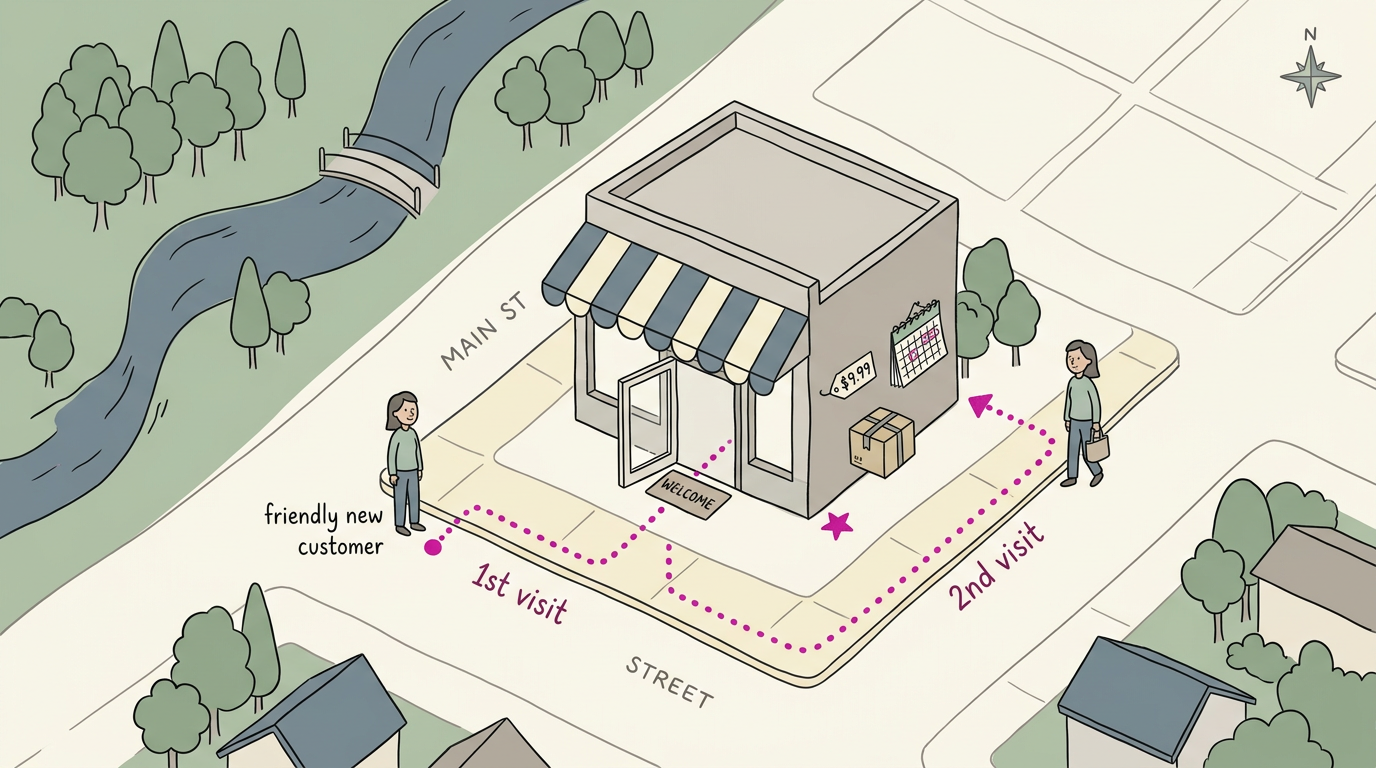
Simple local offers, like bundles and first-visit deals, are the easiest place to start. A first-visit deal gets new customers through the door, and good work earns the second visit.
Mixing pricing models for better results
Market-based plus cost-plus checks your cost-plus number against what local rivals charge.
Value-based plus penetration charges for the value you deliver but opens with an introductory offer.
Nearly every approach above fits one of four core methods: cost-based (what it costs you), value-based (what it’s worth to them), competition-based (what rivals charge), or demand-based (how busy you are).
Common pricing mistakes to avoid:
- Pricing below your real costs just to win work.
- Leaving overhead out of your rate.
- Discounting so often that regulars wait for sales.
- Copying a competitor’s price without knowing their costs.
How Pricing Differs by Industry and Model
Pricing isn’t one-size-fits-all, so we’ll look at how each model differs.
Pricing approaches across different industries
Retail, restaurant, and manufacturing businesses sell products, but pressures differ. A shop often sets a markup, the amount added on top of cost. A restaurant prices its menu so popular dishes help carry the rest.
Manufacturers often price by volume, so bulk orders cost less per unit.
Service businesses sell time and expertise, so price follows the work. A salon that sells a cut-and-color package at one price lets clients know the cost up front, and a monthly retainer, a set fee for ongoing work, does the same for an agency.
Travel businesses use dynamic pricing, where rates rise on a holiday weekend and drop on a quiet Tuesday. They also use bundling, packing a room, breakfast, and parking into one price.
Pricing for B2B and software sales
Business-to-business (B2B) selling often involves complex pricing structures with add-ons and negotiated terms.
A software company might charge per user (each person logging in), sell tiers (packages like basic and premium), and tie it all to a monthly or yearly contract.
Ad-hoc charges are extras outside the main plan, like a setup fee, extra storage, or a one-time training session. Add them up before you commit.
Customer-focused pricing is about value rather than cost. Here’s how it works:
- Start with the problem. Ask what the customer needs fixed.
- Price the result. Tie the quote to what it’s worth to them.
- Match the tier. A small firm and a large one need different packages.
You’re on the buying end too, so when your scheduling tool bills per user, compare it against what you actually need.
How to Analyze and Test Your Prices
Knowing your numbers is one thing. Knowing customers will say yes is another. Here’s how we’d check both.
A simple framework for analyzing prices
Start with four checks:
- Competitor analysis: Note what three nearby businesses charge and include.
- Customer data gathering: Log why people say no to a quote.
- Cost analysis: Add up materials, labor, and overhead per typical job.
- Historical sales data: Check past invoices for services that sell steadily.
Think of a plumber losing estimates to two nearby competitors. Side by side, she sees her call-out fee is listed separately while theirs is built into the total, so she can explain her value instead of cutting her rate.
The goal isn’t to match every competitor. It’s to understand why your price sits where it does.
Test, monitor, and adjust your prices
A/B testing compares two versions of an offer to see which one wins. A salon owner can add a deep conditioning option to half her Saturday slots, leave the rest unchanged for a month, and compare bookings.
Price sensitivity analysis asks how many customers walk away when a price rises a little.
Ongoing monitoring means checking your numbers monthly and adjusting only when results point that way.
Test prices on quotes, not guesses. Guessing is the expensive option.
Software tools that automate pricing
Software handles the repetition; you make the decisions. Useful options include:
- CPQ (configure, price, quote) automation builds quotes from your price list in minutes.
- Pricing engines apply your rules the same way every time.
- ERP and CRM integration links your ERP (enterprise resource planning) and CRM (customer relationship management) so one price change updates everywhere.
- Artificial intelligence (AI) pricing tools suggest prices from past patterns.
- Discount rules and reporting cap discounts and show where they cost you.
Price is more than a number on a menu or an estimate. It’s what customers pay, the signal that tells them what you think you’re worth, and a lever you can pull through your quotes, offers, and monthly software costs.
Start this week by pulling up your last few quotes and software bills. Test one change at a time and watch your calls and bookings.
The right price doesn’t just cover your costs. It tells customers exactly why they should choose you.
References
- Marketing-Orientated Pricing Strategies — doi.org (1998)
- A Selective Hypothesis Testing Perspective on Price‐Quality Inference and Inference‐Based Choice — doi.org (2005)
Questions
What is the price in 4Ps of marketing?
In the 4Ps of marketing, price is the amount customers pay for a product or service. It works alongside product, place, and promotion to shape buying decisions and is the only P that directly generates revenue.
What is dynamic pricing?
Dynamic pricing changes prices as demand or market conditions shift. For example, travel businesses may charge more on busy holiday weekends and less when demand is low.
What is pricing and why is it important?
Pricing is deciding how much to charge for a product or service. It matters because it affects revenue, profitability, customer demand, and how customers perceive the business and its quality.
What are the different types of pricing decisions?
Pricing decisions include the pricing process, the steps used to set or review prices; pricing strategy, the overall approach; pricing structure, how charges are broken down; and pricing frameworks, the models or rules used to guide prices.
What are the 5 factors that affect price?
Five key factors that affect price are costs, customers, competitors, business goals, and perceived value. Together, they help determine what a business can afford to charge and what customers may be willing to pay.
How does perceived value affect pricing?
Perceived value is what customers believe a product or service is worth. When customers see strong benefits, quality, or differentiation, a business may be able to charge more; if they see little value, they may reject the price.
What do prices mean?
Prices tell customers how much they must pay, but they can also signal quality, fairness, and what a business believes its work is worth. Customers compare prices with alternatives and with the value they expect to receive.
Who is responsible for pricing?
The business owner usually makes the final pricing decision, often with input from staff who interact with customers. In a larger company, a manager or team may be responsible for setting and reviewing prices.