Marketing for Auto Repair Shops: A Complete Guide
Marketing for auto repair shops helps drivers find and trust your shop. See how reviews, call handling, and follow-up bring customers back for service.

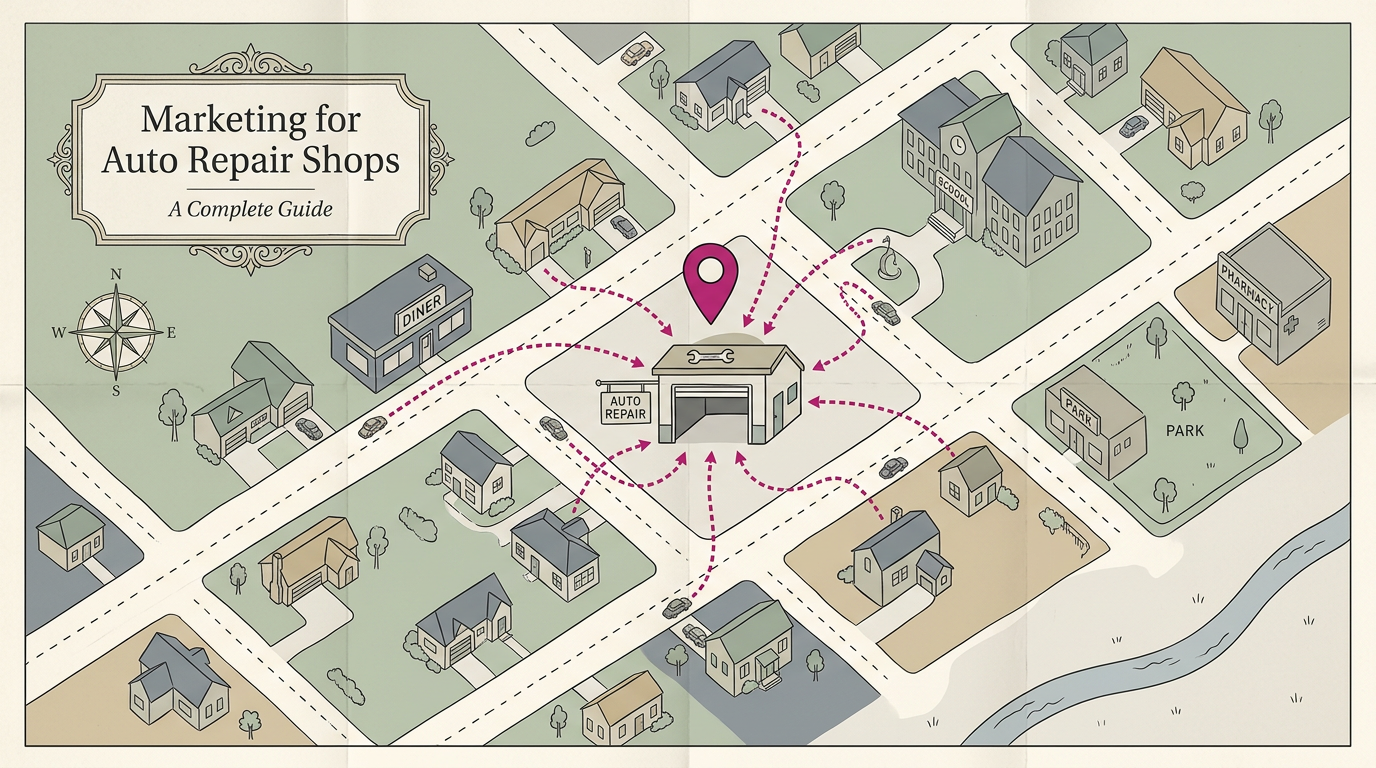
Marketing for auto repair shops is the work of helping local drivers find your shop, trust it, book service, and return. Focus on an accurate map listing, recent review responses, easy booking, helpful local outreach, and timely follow-ups; use ads and social posts selectively, then track calls and appointments to see what works. In practice, a few consistent efforts that earn trust and repeat visits matter more than trying every channel at once.
Picture a car making a grinding noise on the way to work. The driver isn’t shopping for brake pads yet. They’re typing “auto repair near me” from the parking lot and calling whichever shop looks trustworthy first.
Marketing for an auto repair shop means being found when someone needs you, chosen over the shop down the road, and called back when the next service comes due.
In this post, we’ll cover your map listing, reviews, and online booking, then keeping customers coming back and setting a budget. We’ll finish with the phone tools, call handling, and tracking that show what’s working and what to fix first.
Marketing for Auto Repair Shops, Research First
Before you spend a dollar on ads, find out who’s already competing for local drivers and who those drivers really are.
Study nearby rivals and local customer base
Start with the shops near you. Note their services and pricing, especially what they advertise up front, like oil changes, brakes, or towing. Then ask where your prices sit above or below theirs.
Next, check the demographics around you (age, income, household makeup). They show whether you’re near commuters, young families, or retirees, and that tells you what to lead with.
Finally, see how rivals show up online. Check how often they post on social media and which jobs draw comments. You’re looking for gaps, not copies.
Picture your ideal customer and their car
Your ideal customer is a specific type of driver, not just anyone with a car. A shop in a minivan suburb leans into tires and routine maintenance, while one by the industrial park focuses on work trucks. Same trade, different driver.
Think about what they drive and what they’ve brought you:
- Vehicle type ownership: The makes and models common in your area, and which ones you service comfortably.
- Vehicle history: Filter past invoices by make, model, and service record to spot repeat cars.
- Ticket size: What a customer typically spends per visit.
- Visit frequency: How often that customer returns each year.
This is less about how many drivers walk in and more about which ones keep coming back. Take a brake shop owner who sees most repeat visits come from pickup owners in the next town.
She sends them a brake check reminder before the season turns, so the phone rings for the jobs she does best. Know your drivers first.
Build Your Core Online and Local Presence
Drivers want three answers before they book: where you are, what you fix, and how to book.
Local listings, signs, and good taglines
Start with your Google Business Profile, which appears on maps when people search nearby. Keep your name, address, and phone number identical across every local directory.
Signs catch drivers already passing by. Picture a shop with a sign reading “Brakes, Tires, Oil Changes” and an arrow into the drive. A driver who’s been meaning to check a tire pulls in on the spot.
A good tagline is short, specific, and sounds like you, like “Honest work, straight answers.” Less about clever and more about clear. Use that line as your advertising slogan.
Finally, add a service-specific local search page for each main repair, like brake repair in your town.
Make your website book appointments online
Your brand-focused website should look and sound like your shop. Add an online booking portal so customers can pick their own time. A parent who hears a rattle at 10pm can book Monday morning without waiting for the phone.
Live chat is optional, and it only helps if someone can answer fast. Better yet, write pages answering what people actually ask at your counter, like what’s included in an oil change.
Set up your Facebook and Instagram pages
Create a Facebook page and Instagram account, then match your hours and phone number to your listing. Post real work, like a before-and-after of a dented bumper.
Twitter is optional. Pick the platforms where your customers already are, not every one you’ve heard of.
Use single-post publishing to write once and share to each platform with a scheduling tool. Steady wins.
Share Useful Content on Social Channels
Steady, helpful posts keep your shop top of mind. Here’s how we’d approach channels, keep posts useful, and track what works.
Pick the platforms to start with
Start small with Facebook. A page you update weekly beats five accounts you forget about, so set yours up with your address, hours, and phone number first.
Then add Instagram. Pair it with your Facebook page through Meta so you’re not writing everything twice. Use Meta Business Suite to plan posts and check results for both accounts in one place.
Mostly helpful posts with few sales pitches
Most posts should help, not sell. The 80/20 rule is a simple guide: about four posts in five offer value, and one in five promotes your services. Aim to be helpful rather than pushy.
Good value posts include:
- Car care tips, like when to check tire pressure before a road trip.
- Educational maintenance content, such as what a warning light means.
- Shop and technician photos that show the people behind the bays.
- Customer testimonials, shared with permission.
For example, a brake shop owner posts a Saturday photo of her lead tech checking rotors, with one tip on when pads need inspecting. Nobody’s asked to book. The payoff is a customer who remembers your name when their brakes start squealing.
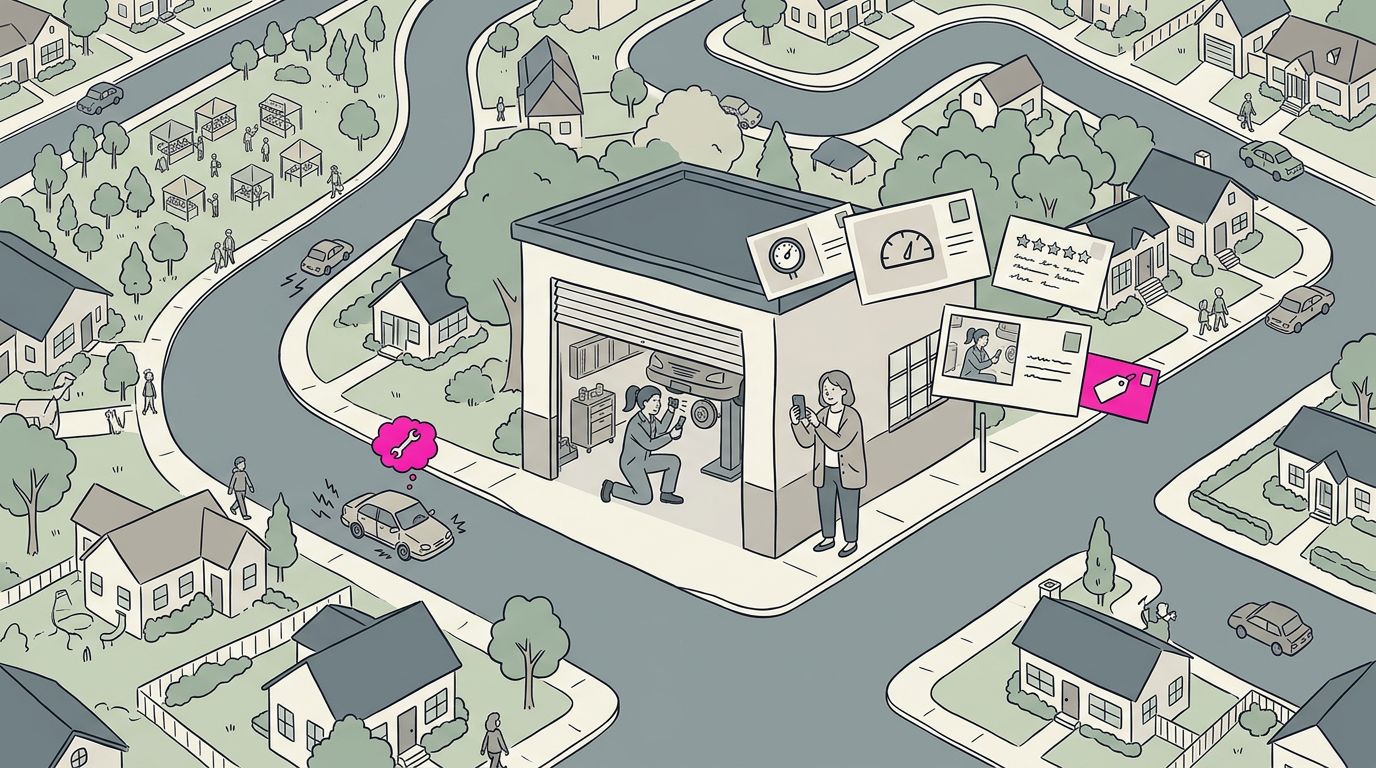
Shoot how-to videos and maintenance vlogs
Video can influence buying decisions. A study published in Scientific Reports found that short-form video’s usefulness, ease of use, and entertainment significantly affect consumers’ trust and purchase intention.
That’s why technician how-to videos are worth making. Film a tech checking tire tread or swapping wiper blades, and keep it short. A steady phone and good light are enough, as long as the advice is useful rather than polished.
For maintenance vlogs, pick one topic a month, like cabin air filters, and talk it through on camera. Over time, these videos build your shop’s expertise in customers’ eyes.
Run quizzes and polls, then track results
Quizzes and polls invite replies, and replies show what followers care about. Instagram quizzes and polls are easy to set up, and maintenance tip posts pair well with them.
For instance, an independent shop owner polls followers on which service they’ve been putting off. The top answer tells her which tip post to write next.
Then measure what happens. Track clicks, likes, and shares on each post. Likes feel nice, but clicks and shares show what’s pulling people in.
Keep posting on a steady schedule
Consistency beats volume. A rhythm you can actually keep beats a burst of posts one week followed by a month of silence. Stick with your few channels until posting feels routine.
Build simple, repeatable campaigns that take minutes to create:
- A Tuesday tip from a technician.
- A Friday photo from the shop floor.
- A monthly maintenance theme with one video and one poll.
Steady wins.
Paid Ads and Direct Outreach to Customers
Paid ads and direct outreach reach people your regular marketing misses, so it’s worth aiming them carefully.
Aim social ads at the right drivers
- Lead and awareness ads: Lead ads collect contact details in the app. Awareness ads build name recognition for later.
- Demographic and interest targeting: Aim at people who can drive to you, not everyone who scrolls past.
- Clear call-to-action button: Match it to your goal, like “Call Now” for urgent repairs.
- Goals and budget: Pick calls or bookings, then set a daily spend you can sustain.
- Manual vs. Advantage+ placements: Manual lets you pick where ads run. Advantage+ lets the platform decide. Start manual so you can see what works.
Think of a brake shop targeting nearby drivers before a holiday weekend. The front desk logs which ad sent each call, so the owner knows what filled the schedule.
Boost your best posts beyond followers
Start with high-engagement posts: boost one that already drew comments, since that shows people want to engage with it.
- Reach beyond followers: A boost shows your post to neighbors who’ve never heard of you.
- Hire an expert if needed: A local marketing freelancer can run boosts for you. Ask for calls and bookings, not just likes.
Consider a muffler shop whose before-and-after post drew comments. A small boost can put it in front of drivers across town.
Pair direct mail with digital campaigns
Auto repair shops can combine direct mail with digital marketing in coordinated campaigns, and a study on offline and online marketing found positive synergy between direct mailing and display advertising.
- Seasonal campaigns: Time mailers to the season, like a winter tire reminder.
- Data-aligned targeting: Use your own customer records to choose who gets the mailer and which neighborhoods see your digital ads.
- Direct mail return on investment (ROI): Mail costs money, so give each piece its own phone number or promo code. Track it, or you’re guessing.
Flyers, banners, and windshield ads nearby
- Flyers and banners: Print one offer and your phone number, then post flyers on community boards and hang banners where drivers pass.
- Windshield placements: Small cards go under wipers, but only where the property owner allows it and local rules permit.
- Local distribution: Drop stacks at neighboring businesses that agree.
Think of a tire shop that leaves a stack at the coffee shop next door. A driver who grabs one while waiting gets one offer and one number to call.
What is SEO in automotive?
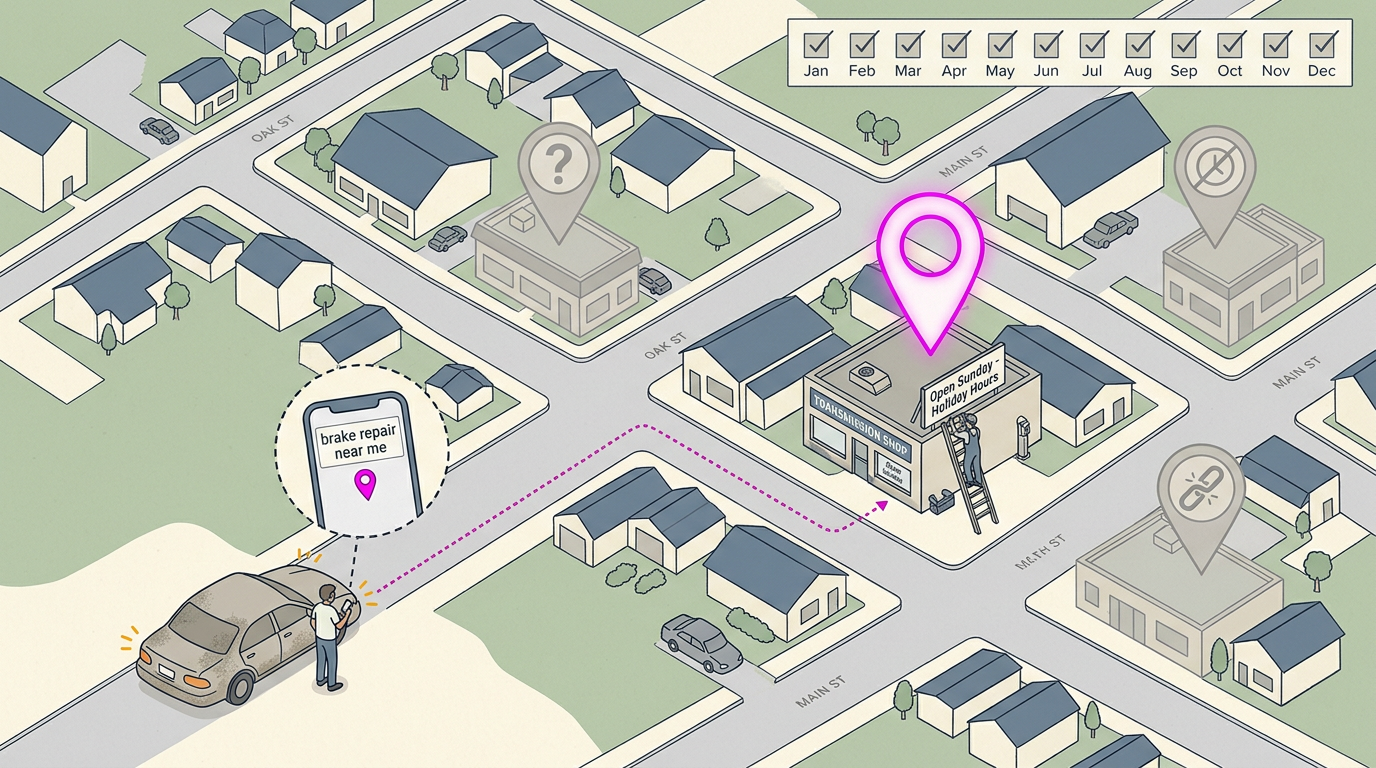
Automotive search engine optimization (SEO) means making your shop easy to find when someone searches “brake repair near me.” Steady upkeep beats a one-time push.
- Local Services Ads changes: If you run Local Services Ads, check your settings, since the program has changed.
- AI-driven search visibility: As search leans on artificial intelligence (AI), keep your name, address, and phone number consistent everywhere.
- Year-round consistency: Update hours and answer reviews all year, not only before spring.
Think of a transmission shop that keeps holiday hours current. A stranded driver searching on Sunday gets an accurate answer.
Get Involved and Partner with Locals
Neighbors trust the shops they see around town, so put your name where they already gather.
Sponsor local teams and host car clinics
Sponsorship means paying to put your name on a sports team, like a youth league jersey.
A process model of small business sponsorship of regional sport events found that sponsors mostly did it for community involvement, and that checking whether it paid off tended to be simple and inexpensive.
Partner with schools and churches the same way. Then host a free car clinic in your parking lot with tire pressure checks and a quick brake look.
Trade shout-outs with the coffee shop down the street, which puts you in front of their customers, not just yours. Keep events within a roughly 7-mile customer radius, since those neighbors can realistically drive over for a repair.
Support causes you personally care about
Choose one or two causes you care about, like a food pantry, and stick with them. That steady support builds a humanized brand, one that feels like real people instead of a logo.
Customers often pick a shop because they trust who is behind the bay doors, not just what the sign says.
Think of a shop partnering with a local food bank on a winter drive: customers bring a canned good for a free fluid check, and the owner posts the growing pile online. The food bank gets stocked, and neighbors notice.
Work with safety groups and car donations
Look for local drunk-driving prevention groups and traffic safety foundations in your area. Safety is already your business. Offer a free brake check at their booth or a tip sheet on your counter.
Vehicle donation programs take older cars and send the proceeds to charity. Point customers to a reputable one, and check the details before you put your name on it.
Swap referrals with nearby garages
A nearby garage, like a transmission specialist, may have work you don’t do. Agree on a cross-referral so each shop sends the right jobs to the other.
Ask each referred customer which shop sent them, since those mutual customer suggestions show which partners send work back. A referral is a handshake with a phone number attached.
Earn Reviews and Protect Your Reputation
Happy customers rarely leave reviews unprompted, and every review deserves a reply, good or bad.
Make it easy for customers to review
Ask in person as the keys go back into the customer’s hand: ‘Would you mind sharing how we did?’ It’s simple, and it feels personal.
- Text-based feedback requests. A short text on the day of service asks how it went, so problems reach you privately first.
- Redirect to Google listing. Send happy customers straight to your Google Business Profile so they’re one tap from leaving a review.
- Video testimonials. Ask a regular, with their permission, to record two sentences about the job. A real face says more than any tagline.
- Text review request after pickup. For example, a brake and tire shop owner sets up an automatic text with a review link right after each pickup. Her front desk never has to remember, and reviews keep arriving.
Respond to all reviews and reuse praise
- Address negative reviews promptly. Reply to the problem, not the person: answer quickly, own the mistake, and invite them to call. A tire shop owner’s reply like ‘Sorry the wait ran long. Please call the shop and we’ll make it right’ shows future customers a calm, fair owner.
- Respond to every review publicly. Public replies show future customers how you handle problems. Keep each one short and specific.
- Post testimonials on website and social. Pull your best recent praise into your site and social posts, with permission. A real quote usually works harder than a slogan you wrote yourself.
- Track review recency, volume, and ratings. Recent reviews show a prospect the shop is busy and well regarded. Watch how many arrive each month and where your average star rating sits. A steady stream beats a one-time burst.
How Your Shop Handles Sales and Service
Sales are won or lost fast: in the first minutes after a customer reaches out, and again in the days after the car leaves.
Answer every lead within five minutes
Name one lead handler who owns every web form, text, and voicemail from new customers. Your target is a reply within five minutes.
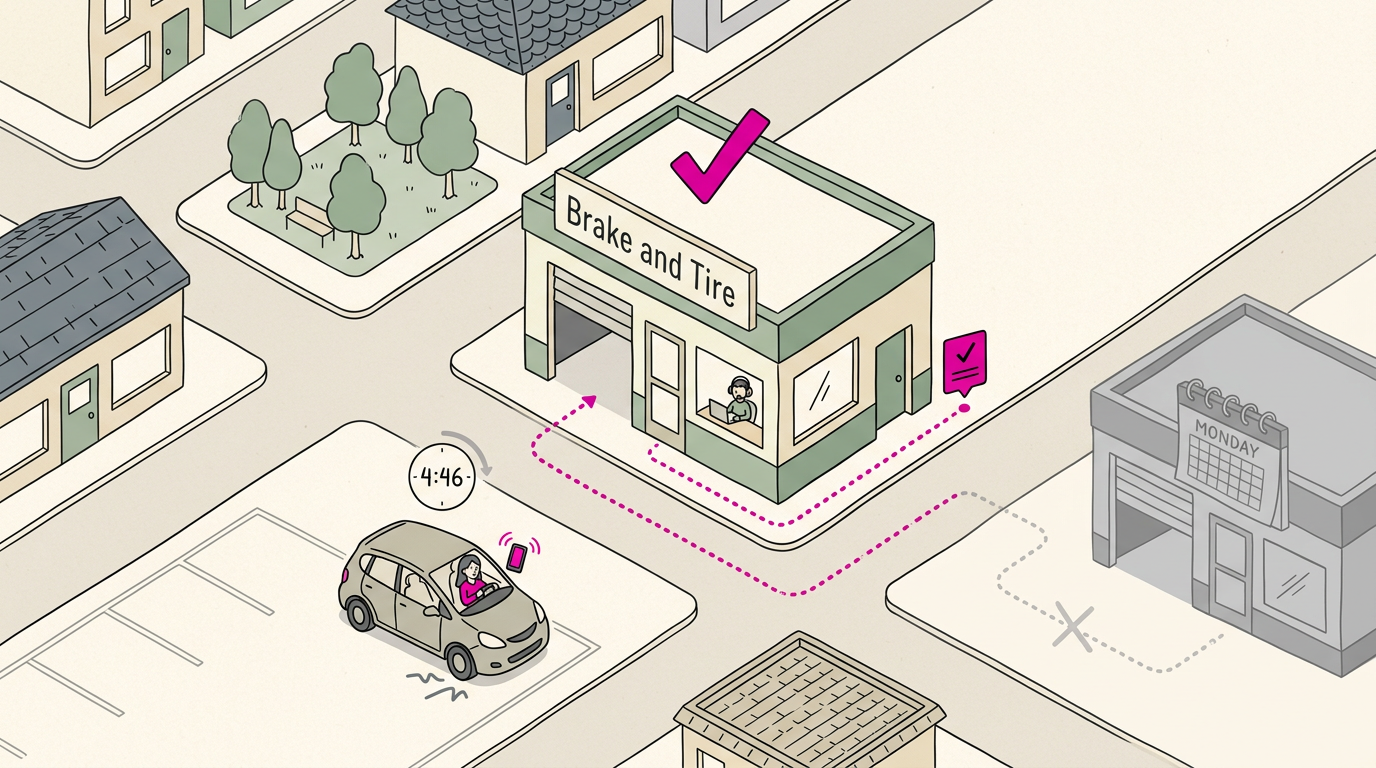
Picture a driver who fills out your online form at 4:45 on a Friday about a grinding brake noise. If someone calls before she leaves the parking lot, she’s likely to book. If she waits until Monday, she’s calling the shop down the road. Speed wins.
Track every lead in a customer relationship management (CRM) system like HubSpot so nothing slips through.
Technicians sell too. Coach them to explain, not pitch: show the worn part, say plainly what can wait, and customers trust the quote.
When techs are under a lift and the phone rings out, an automatic text reply can answer within seconds with your hours. The goal is a quick callback, not a perfect one.
Build trust early and follow up after
- Personal relationship from day one. Save each customer’s name and vehicle in your CRM so the next visit can start with “How’s the Civic running?”
- Care for vehicles properly. Cover seats and floor mats, and return the car cleaner than it arrived.
- Post-service satisfaction check. A day after pickup, text or call to ask how it’s driving. Think of a mechanic who hears from a customer that the steering wheel shakes after new brakes. A quick look that afternoon fixes it before it becomes an online complaint.
Keep Customers Coming Back for Years
Getting a car in the door once is good. It’s repeat visits that fill your calendar.
Stay in touch through email and texts
You can start with three channels:
- Email: longer updates and thank-you notes.
- Text message (SMS): short and quick to read.
- WhatsApp: a messaging app many customers already use.
Send a thank-you email after each visit, then a loyalty follow-up a few weeks later. Booking software can send automated service reminders, so nobody has to remember. Think of a tire shop whose software texts customers when rotations are due.
The front desk stops chasing, and rotation slots fill.
Reward loyalty and referrals with perks
Loyalty programs reward repeat visits, and referral rewards thank customers who send friends your way.
Shops can use both to encourage repeat visits and customer referrals, and a case study on an automobile manufacturer’s loyalty program measures its impact.
Aim to keep 90%+ of new customers coming back. The goal is people who stay, not just show up once.
Use promotions wisely to fill slow days
Discounts work best when used sparingly, not handed out to everyone. If every visit comes with a coupon, customers learn to wait for one. Save offers for specific goals:
- Fill slow booking days: a small Tuesday or Wednesday discount when the bays sit empty.
- Re-engage lapsed customers: a friendly note and offer for anyone who hasn’t visited in a year.
- Seasonal offers: a battery and tire check before winter or an air conditioning tune-up before summer.
Think of a shop owner whose Wednesdays are always quiet. A Wednesday-only text to past customers can fill open bays without discounting every job. Fuller bays, fewer giveaways.
Plan Your Budget and Measure the Payoff
Marketing pays off when you know what to spend and what it brings back.
Budget 5 to 15 percent of profits
Set aside 5 to 15 percent of your profits as a starting point. New shops don’t have profits yet, so they’ll likely use their own funds, tied to a clear plan.
Match spend to strategy. A Cal Poly paper, Campaign in a Box, notes that businesses must know what they have to work with before choosing channels. A brake shop chasing repeat oil-change customers doesn’t need a citywide billboard.
Track which ads actually bring customers
Set a target return on investment (ROI), meaning new business per dollar spent, and check each ad against it. Let data, not gut feel, guide your decisions.
Favor ads with trackable results, like a unique phone number, so you know which ad brought the call, not just how many came in.
The hard part is attribution: a customer might see your ad, search your name, read reviews, then call. Which effort gets the credit? Call tracking helps. Each ad gets its own forwarding number, so when it rings, you know the source.
Guessing costs money. Tracking ends the guessing.
What are the 5 main marketing strategies?
Word-of-mouth referrals help, but they can’t be your whole plan. Core strategies run from your map listing and reviews through booking and retention, and this article covers each one.
Pick strategy over volume: a few well-run efforts beat a pile of half-finished ones.
Start by asking where customers actually find you. Think of a transmission shop whose customers mostly live nearby. Its neighborhood reviews and map listing do more than a citywide campaign, and the calls come from the streets it already serves.
Marketing for your auto repair shop comes down to a simple chain: be found on the map, earn reviews that make people choose you, make booking easy, and keep those customers coming back.
Your phone tools, call handling, and tracking tie it together by showing you which efforts bring in real appointments.
Don’t try to fix everything at once. Start with the weakest link you can see this week, check the results, and move to the next one. Steady small wins beat a big overhaul you never finish.
The map gets you found. The reviews get you chosen. The follow-up keeps them coming back.
References
- Influence of short video content on consumers purchase intentions on social media platforms with trust as a mediator — nature.com (2025)
- A process model of small and medium enterprise sponsorship of regional sport tourism events — journals.sagepub.com
- Evaluating the impact of a loyalty program: A case study in automobile industry — doi.org (2010)
- Campaign in a Box: Creating a Universal Public Relations Plan for Community Success for any Small Business — digitalcommons.calpoly.edu (2013)
- Do offline and online go hand in hand? Cross-channel and synergy effects of direct mailing and display advertising — doi.org (2020)
Questions
What is a good tagline for an auto repair shop?
A good auto repair shop tagline is short, specific, and sounds genuine, such as “Honest work, straight answers.” It should clearly convey the kind of service customers can expect.
What is SEO in automotive?
Automotive SEO, or search engine optimization, is the work of making an auto repair shop easier to find in online search results, especially for local searches such as “brake repair near me.” It includes keeping business details consistent, updating hours, and maintaining local listings and service pages.
What are the 5 main marketing strategies?
Five core marketing strategies for an auto repair shop are building a local online presence, earning and responding to reviews, making booking easy, staying in touch to encourage repeat visits, and using referrals or targeted advertising to reach new customers. Focus on a few strategies you can maintain and track rather than trying to do everything at once.
Sources
- Influence of short video content on consumers purchase intentions on social media platforms with trust as a mediator | Scientific Reports, nature.com,
- A process model of small and medium enterprise sponsorship of regional sport tourism events, journals.sagepub.com
- Evaluating the impact of a loyalty program: A case study in automobile industry, doi.org,
- Campaign in a Box: Creating a Universal Public Relations Plan for Community Success for any Small Business, digitalcommons.calpoly.edu,
- Do offline and online go hand in hand? Cross-channel and synergy effects of direct mailing and display advertising, doi.org,