What Is a Social Media Campaign? A Plain-English Guide
What is a social media campaign? See how one goal, audience, and end date turn posts into a focused push, then plan content and track calls and bookings.

A social media campaign is a planned, time-limited effort to reach a defined audience and achieve one specific goal, unlike everyday posting that keeps a business visible. It brings themed posts, offers, and replies together around a clear action, with a set schedule and measures such as calls, bookings, or website visits. Keeping the campaign focused and manageable helps you see what works and whether it prompted people to act.
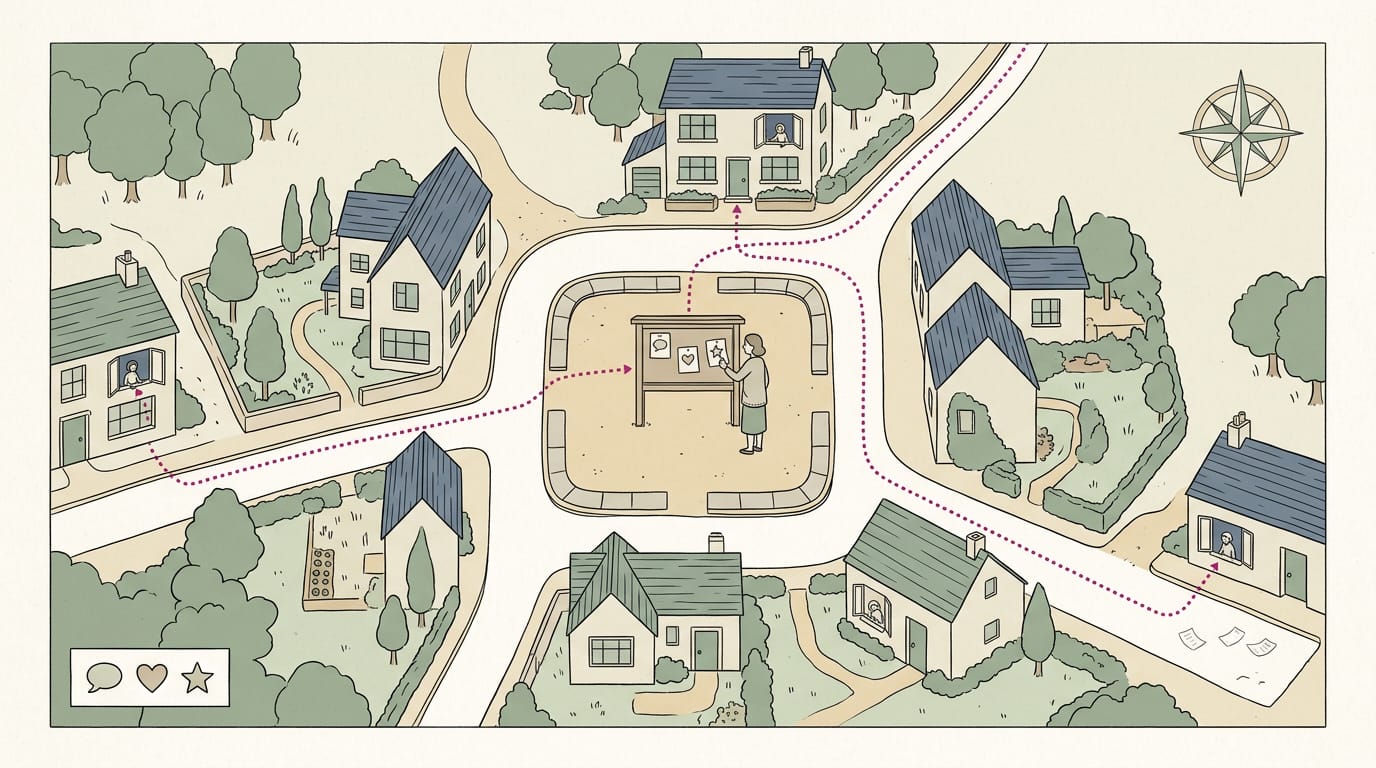
Think of leaving your porch light on every night versus throwing a block party with a date on the calendar. Both bring neighbors outside, but only the party has a goal, a start, and an end. Everyday posting is the porch light.
A social media campaign is the block party: a planned push with one goal, one audience, and a fixed run time.
For a local business, that means a short, focused effort to win more calls and bookings from people nearby. Here’s what a campaign really is and how to run a small one without it becoming a second job.
What a Social Media Campaign Really Is
Ever post something, get a few likes, and watch it vanish by Friday? That’s everyday posting. A social media campaign is a focused push with one goal, one theme, and an end date.
The core traits of every campaign
- Coordinated, goal-driven social effort. Posts, offers, and replies all point at one result.
- Time-bound, themed content. It runs for a set stretch, like two weeks, around one idea.
- A specific business objective. Fill the Tuesday appointment book, not just chase followers.
- A paid and organic mix. Paid boosts reach nearby people you choose; organic posts reach your current followers at no ad cost.
How campaigns differ from everyday posting
Everyday posting is business as usual, aimed at consistency. A campaign aims for one-off success instead.
| Aspect | Everyday posting | Campaign |
|---|---|---|
| Purpose | Stay visible | One specific goal |
| Timeline | No end date | Set start and end dates |
| Measurement | General likes and reach | Its own key performance indicators (KPIs) |
| Strategy | Day-to-day | Must align with your overall strategy |
A campaign finishes. Everyday posting keeps going.
What most campaigns usually include
Most campaigns pull from a familiar toolkit:
- Branded hashtags. A tag made for this campaign so people can follow along.
- Influencers and creators. Local people who share your offer with their audience.
- User-generated content. Photos and reviews your customers share about you.
- Contests and giveaways. A prize that asks people to comment, share, or visit.
- Brand partnerships. Teaming up with a non-competing local business.
- Employee advocates. Your team sharing posts from their own accounts.
Picking the right kind of campaign
Choose by the result you want, not the platform you like best:
- Brand awareness. Get in front of people who’ve never heard of you.
- Conversion. Get people to book, buy, or call.
- Influencer. Partner with a creator to borrow their audience.
- Engagement. Earn comments, shares, and saves.
- Artificial intelligence (AI)-powered. Tools that target ads or test post variations for you.
- Traffic-driving. Send people to your website or booking page.
Consider a bakery owner who wants more Saturday pickup orders. A conversion campaign fits: two weeks of posts with a small weekend offer, plus one boosted post aimed at nearby people. When it ends, she counts her Saturday orders against the weeks before.
Why Brands Run Social Campaigns
Your customers are already scrolling, so the real question is how you reach them and whether it pays off, measured as return on investment (ROI).
How much people use social media
According to Kepios’s analysis for DataReportal, there are 5.66 billion active social media user identities, or 68.7 percent of the global population. Many people use several platforms and check them all day, so one app reaches only part of your audience.
How campaigns help a business grow
Here’s what a campaign can do:
- Brand awareness and reach. Your name reaches people who don’t follow you yet.
- Leads and website traffic. A clear next step, like “call to book,” sends people to your phone or site.
- Customer engagement and loyalty. Replies keep regulars coming back.
- Reviews and customer support. Campaigns can ask for reviews and answer questions publicly.
- Cost-effectiveness vs. traditional. A 2025 systematic literature review found that digital marketing usually outshines traditional options on cost-efficiency.
So what do ads cost? In a pilot study on public health interventions, reaching 1,000 targeted users fell in about the same range as less well-targeted radio and television ads, and each initial engagement (a user clicking through an ad) cost less than $1.
That’s one study, though.
Social ROI against email and crowded feeds
Email and social are distinct channels, and a 2013 case study of a retailer’s promotional sale by Peter J. Danaher and Tracey S. Dagger shows each channel’s campaign returns can be assessed separately.
Track them apart so you’ll know which one brings in calls.
A study of brand reach on Facebook found that organic reach (people who see posts without paid promotion) dropped significantly in 2014 and 2015 after Facebook’s first large algorithm change. Your posts reach some followers, not all.
Feeds are crowded, so vague posts get scrolled past. Picture a dental office running two weeks of posts around one offer, a new-patient cleaning booked by a set date. The front desk sees which posts drew calls, and the campaign ends on schedule.
Planning Your Campaign Step by Step
Here’s how to do social media marketing: pick a topic, set goals, learn your audience, check what rivals do, choose platforms, and set a posting rhythm. We’ll walk through each step below.
What are some good campaign topics?
A seasonal or launch-driven theme is the easiest place to start: a spring tune-up special, a new menu, or a back-to-school haircut push. Good ideas also come from social listening, which just means reading what people already say.
Brainstorm with other teams too, since staff hear what customers care about.
Start with business value. Pick something customers can do, like calling or booking, not just something that gets likes. A dog groomer’s holiday push that links each post to the booking page can fill slow weekdays.
Setting goals and targets you can measure
Decide on goals before you post. Most fall into awareness (people know your name), engagement (people comment or message you), or sales (people call or book). Make them SMART goals: Specific, Measurable, Achievable, Relevant, and Time-bound.
“More calls” is a wish; “more calls from Facebook this month” is a goal.
Pick a metric for each goal, like call taps or profile visits, and a number to hit. Expect gradual progress, not a viral moment. Set weekly hours and any boost budget up front, with an end date, so the campaign doesn’t become a second job.
Figuring out who you’re trying to reach
Start by surveying or interviewing recent customers about what they value, and use social listening to gauge sentiment. Next, sketch a buyer persona, a short profile of a typical customer.
Picture a homeowner with a leaking water heater searching late at night, so a plumber’s post leads with after-hours availability. Segment by age, neighborhood, and first-time or repeat visits.
Finally, split your acquisition audience (people who haven’t used you yet) from your retention audience (past customers). New customers need a reason to trust you; past ones need a reason to come back.
Learning from what rivals already do
Rivals are a free source of ideas, so watch what they do:
- Analyze, don’t copy. Ask why a post works, then adapt it to your own voice.
- Top-performing posts and formats. See which posts draw comments and whether video or photos win.
- Posting frequency. Note how often they post and how followers respond.
- Influencer use. A local creator helps when their followers are your actual customers.
Picking the right social platforms
Match the platform to your audience, not the newest app, and don’t try to be everywhere. A couple of platforms you keep up with beat a long list you abandon.
- Local first. Facebook, Instagram, and Nextdoor suit most local businesses: Facebook for updates and events, Instagram for strong photos, and Nextdoor for neighbors.
- Other platforms. LinkedIn suits business-to-business work, X favors quick conversation, TikTok favors short video, and Pinterest favors visual ideas.
Platform-specific strategy means each network needs its own shape. A bakery owner might post the morning bake on Instagram and weekend specials on Nextdoor.
When and how often to post
- Post when your audience is active. Check each platform’s insights.
- Test posting times. Compare a few slots.
- Schedule in advance. Batch a week of posts at once.
- Stagger across platforms. Spread the same idea over several days.
- Keep a steady content flow. A few posts every week beat one big burst.
Consider a food truck owner who schedules next week’s posts on Sunday evening, so the campaign runs while she’s on the road. Steady beats frantic.
Making and Running the Campaign Content
Your plan sets the goal, but customers only see the content. Here’s how we’d make it clear and manageable.
Writing copy that sounds like you
Write copy that sounds like you, not a brochure. Match your tone to your audience: warm for a dental office, quick and cheeky for a food truck.
Keep text short with white space (empty room around your words), and use high-quality graphics and the occasional GIF (a looping clip). Short-form video, like a quick phone clip of a finished job, shows your work fast.
A bakery owner who posts a funny story about the regular who orders the Saturday tray gets messages about pickup times.
Letting customers and creators do the talking
Your happiest customers can make your case for you. Ask for customer testimonials (written praise from real customers) soon after a good job.
User-generated content is posts customers make about you, like a haircut photo tagged with your salon’s name, which reaches their friends. Micro- and nano-influencers are local creators with small, engaged followings that often suit a small budget.
Celebrity involvement usually costs more than a local campaign can justify. Scarcity can drive FOMO (fear of missing out), but only when it’s true. ‘Only four spots left Thursday’ is honest urgency, while fake urgency backfires.
Hashtags, clear calls to action and live Q&As
Start with campaign-specific hashtags: one unique tag, like #ElmStBakeoff, that groups every post in the campaign. Each platform has its own hashtag habits, so match what local businesses there do.
Give each post one call to action (CTA), the one thing you want people to do next, like ‘Message us to book.’ Two asks split attention, but one gets done. Try a live Q&A (a live question-and-answer session) so people can ask in real time.
An auto shop could host a short one on brake checks and answer what the front desk hears most.
Keeping your brand consistent everywhere
Keep your voice the same on every platform: friendly and recognizably yours. Use the same logo, colors, and offer wording so customers recognize you on any app. Then repurpose content per platform.
One filmed job can become a short clip, a photo post, and a text update, each cut to fit. The 5-5-5 rule is a simple, repeatable routine named for its three fives, so posting becomes a habit instead of a daily scramble.
Replying to comments and tweaking fast
Reply fast, not perfectly. A quick ‘Thanks, see you Saturday!’ shows a real person is watching. Handle negative feedback calmly and in public: thank them, apologize, and invite them to call so you can make it right.
Make real-time adjustments: if a video gets views but no messages, swap the call to action, not the whole campaign. Set an approval workflow (who signs off on a post, and how fast) before the campaign starts.
Picture a plumber whose storm-damage post needs one owner’s text yes by noon, while the storm is still news.
How to Measure, Test and Improve
Once your campaign is live, the real question is whether it’s bringing in calls. A few simple checks answer that without turning into a second job.
Comparing two versions to see what wins
An A/B test shows two versions of one post to similar groups and tracks which gets more response. Test images, copy, or tone, changing one at a time, or you won’t know which change did the work.
For example, a hair salon owner might run the same weekend promotion with two photos: a finished style, then the stylist at work. Keep whichever brings in more booking requests.
Tie results to goals before you launch. Judge each version by calls rather than likes, since a post full of hearts and no phone calls has lost.
Keeping an eye on the numbers
Check in on a steady rhythm:
- Metrics tied to objectives. Watch the few numbers that match your goal, like calls or bookings.
- Social sentiment monitoring. Scan comments, mentions, and reviews for what people actually say, and reply promptly.
- Analytics and listening tools. Start with the insights built into each platform.
- Continuous optimization. If a post brings no calls by midweek, swap its photo or call to action. Small, steady changes beat a big overhaul.
- Review quarterly. Check your numbers every three months, even between campaigns.
When the campaign ends, write a one-page wrap-up: what you spent, which posts drew calls, and one lesson for next time.
Campaign Examples and What They Teach
Famous campaigns feel out of reach for a local shop, but each one teaches a lesson you can borrow.
Campaigns built on real stories
Tinder’s real couples put everyday people’s stories front and center. According to a London School of Economics analysis, Spotify Wrapped turns users’ listening histories into shareable campaign content.
Apple’s #ShotOniPhone runs on user-generated content (UGC), the photos and videos your customers make and share themselves. The lesson? It’s less about polished ads and more about real people.
Bold stunts and limited-time buzz
The Dunkin’ Spidey D character ran as a limited-time stunt, and Blendtec’s product stunts showed off its blenders in unusual ways.
Barbie’s selfie generator gave fans a reason to share their own photos, and the Getty Museum Challenge invited people to join in.
According to The Guardian, Starbucks’ Unicorn Frappuccino was a limited-edition drink released “for this week only” that became a viral hit. Buzz is big but brief, which suits a campaign with an end date.
Try it at a small scale: a bakery owner runs a two-week “secret flavor” drop, posts it on the shop’s Instagram, and counts how many walk-ins mention it.
When campaigns stand for something
Some campaigns take a clear stand. Dove’s #RealBeauty built a hashtag campaign around a values message, and Gillette’s outrage marketing shows how a stance can provoke strong reactions. Heineken’s Worlds Apart carried a big social theme.
A political campaign’s rapid response posts react to the news as it happens. A stand works best when it’s true to your business, not a borrowed trend.
A plumber who sponsors the youth soccer team and shares each game’s photos is taking a stand for the town, and neighbors see it.
How brands used each platform’s style
The format changes by platform, but the job stays the same. Oreo, Nike, and Google all show how brands adapt their posts to a platform.
A Ryerson University research project on music in advertising points to Oreo’s and Nike’s social posts as examples of brand-led campaigns. Wendy’s and Arby’s lean on humor, and National Geographic’s Your Shot invited people to share their own photos.
Agency client results show these ideas at work, though you don’t need an agency to borrow them.
A social media campaign is a planned, finite push with a clear goal, a defined audience, and an end date. Everyday posting keeps your name visible. A campaign gives people nearby a reason to act now, and it shows you whether that reason worked.
Keep it small: one goal, one local audience, a fixed window, and a simple way to check results. That’s how you get the payoff without it turning into a second job.
The porch light keeps you visible. The block party gets people through your door.
References
- Comparative Analysis of Traditional and Digital Marketing Effectiveness in SMEs: A Systematic Literature Review, 2025 — journals.sagepub.com (2025)
- How algorithmic events like Spotify Wrapped can reveal what tech companies really ‘know’ about us — eprints.lse.ac.uk (2025)
- Comparing the Relative Effectiveness of Advertising Channels: A Case Study of a Multimedia Blitz Campaign — journals.sagepub.com (2018)
- Full article: How advertising in offline media drives reach of and engagement with brands on Facebook — tandfonline.com (2018)
- Using Social Media, Online Social Networks, and Internet Search as Platforms for Public Health Interventions: A Pilot Study — pubmed.ncbi.nlm.nih.gov (2016)
- Pump up the jam: how music in brand advertising can create deeper connections with consumers — doi.org (2021)
- Digital 2026: Global Overview Report — DataReportal — datareportal.com (2025)
- Screen time calculator: How much of your life is spent on social media? | Social Media News — aljazeera.com (2026)
- Unicorn Frappuccino mania: Starbucks aims at Instagram | Starbucks — theguardian.com
Questions
What is the 5 5 5 rule on social media?
The 5-5-5 rule is a simple social media routine built around three groups of five. Its exact steps can vary, but it commonly means spending time engaging with five accounts, sharing or commenting on five posts, and creating or planning five pieces of content. The key is making social activity a repeatable habit.
What are some good topics for a campaign?
Good campaign topics include seasonal promotions, a new product or service launch, customer stories, limited-time offers, community events, and useful answers to questions customers frequently ask. Choose a theme that gives people a clear next step, such as booking or calling, and fits a specific business goal.
How much do social media ads cost?
Social media ad costs vary by platform, audience, competition, and campaign goal, so there is no single standard price. Set a budget you can afford before launching, and track results such as calls or bookings; one public-health pilot study found that an initial ad click cost less than $1, but that figure is not a universal rate.
How to do social media marketing?
Start by choosing one business goal, a specific audience, and a fixed campaign period. Pick suitable platforms, plan a steady rhythm of themed posts, include one clear call to action, and use organic content alongside paid promotion if it fits your budget. Track metrics tied to your goal, such as calls or bookings, and adjust content based on what performs.
Sources
- Digital 2026: Global Overview Report — DataReportal – Global Digital Insights, datareportal.com,
- Screen time calculator: How much of your life is spent on social media? | Social Media News | Al Jazeera, aljazeera.com,
- Comparing the Relative Effectiveness of Advertising Channels: A Case Study of a Multimedia Blitz Campaign - Peter J. Danaher, Tracey S. Dagger, 2013, journals.sagepub.com,
- Full article: How advertising in offline media drives reach of and engagement with brands on Facebook, tandfonline.com,
- Comparative Analysis of Traditional and Digital Marketing Effectiveness in SMEs: A Systematic Literature Review, 2025, journals.sagepub.com,
- Using Social Media, Online Social Networks, and Internet Search as Platforms for Public Health Interventions: A Pilot Study - PubMed, pubmed.ncbi.nlm.nih.gov,
- How algorithmic events like Spotify Wrapped can reveal what tech companies really ‘know’ about us, eprints.lse.ac.uk,
- Unicorn Frappuccino mania: Starbucks aims at Instagram | Starbucks | The Guardian, theguardian.com
- Pump up the jam: how music in brand advertising can create deeper connections with consumers, doi.org,