Social media optimisation, explained in plain English
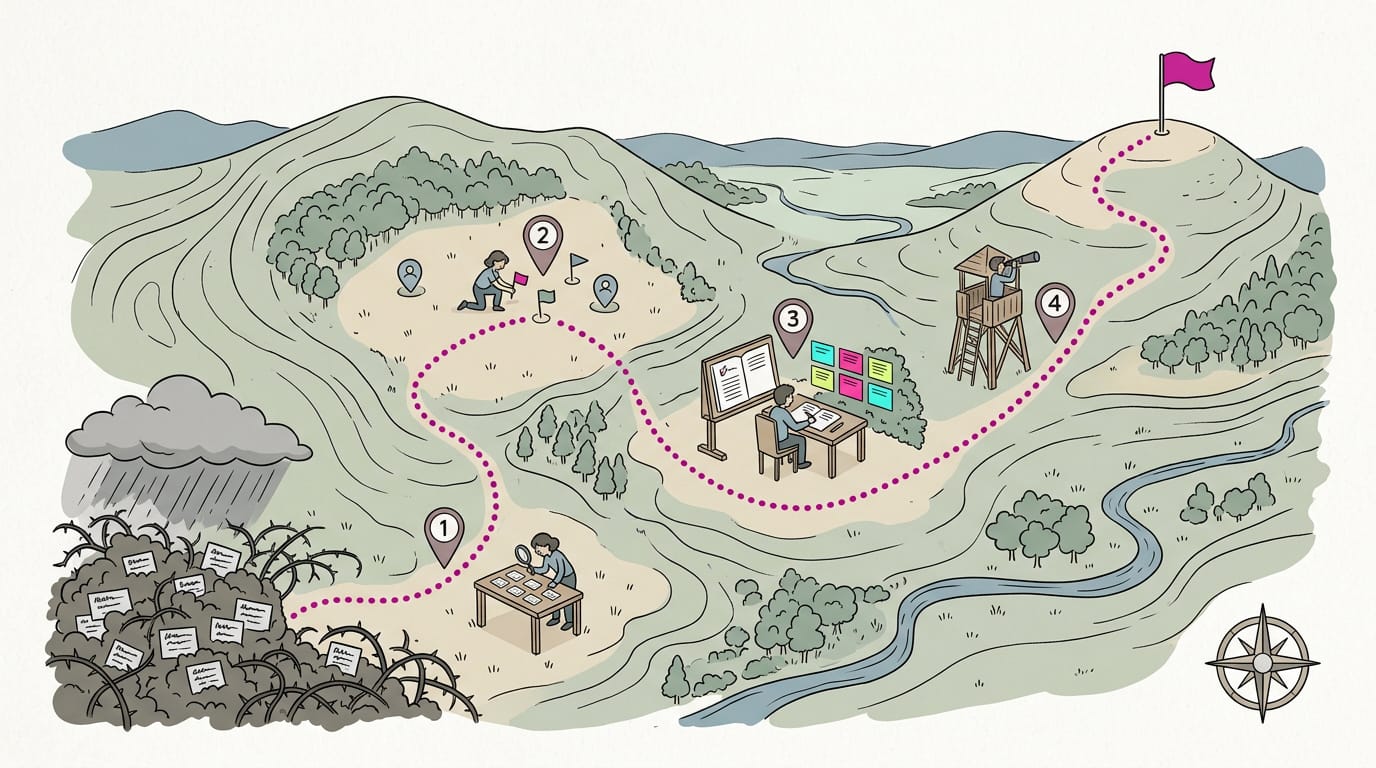
Social media optimisation turns posts into action. Pick platforms for your goals, track clicks, and keep your map listing, reviews, and website ahead of social.


Social media optimisation is the process of improving your profiles and posts so the right people can find your business, trust it, and take action. It means setting clear goals, keeping profiles complete and consistent, sharing useful content regularly, engaging with people, and tracking calls or bookings rather than likes alone. Focus on the platforms your customers use, while keeping your website, map listing, and reviews ahead of social, so each account supports real business results.
Picture a bakery owner who posts a gorgeous photo of fresh sourdough on Sunday night, then wonders why nobody walks in Monday. The post looked great, but it wasn’t set up to be found or acted on. Social media optimisation closes that gap.
Put simply, it means shaping your profiles and posts so the right people find you and take the next step.
This guide covers the essentials and shows which platforms deserve your limited time, with your map listing, reviews, and website kept ahead of social.
Why Social Media Optimisation Matters
Your business is probably on social media already, but is it pulling its weight? Social media optimisation (SMO) means shaping your profiles and posts around goals like more calls and bookings.
Improving your social presence on purpose
Good SMO is about intention, not random posting: you start with a goal and build your posts around it, aiming for visibility, engagement, and brand authority. Audit each profile against best practices, then fix what’s lagging.
Picture a salon owner who wants more bookings. Her bio links to her booking page, and her posts show finished work with a line on how to book. When a client asks for a Saturday slot, the answer is one tap away.
How it helps your business grow
Social media optimisation pays off in several practical ways:
- Brand visibility and awareness. Useful posts keep your name in front of people nearby.
- Higher engagement rates. According to a 2026 study by Ivy Chu Dang and colleagues, SMO can help businesses achieve higher engagement rates with their audiences.
- Trust and authority. Answering questions in public shows customers how you treat people.
- Website traffic and leads. Each post can link to your site or booking page.
- Reach without a big budget. Unpaid posts cost you time, not ad spend.
- Customer insights and advocacy. Comments reveal what people ask, and happy customers who tag you do your promoting.
The main areas you can optimise
Here’s where we’d focus, in five areas:
- Profile optimisation. Your name, bio, and contact details match what you offer.
- Content optimisation. Posts are useful, on-brand, and easy to scan.
- Engagement optimisation. You reply to comments and messages promptly.
- Platform feature optimisation. You use tools like booking buttons where they fit.
- Performance tracking. You watch calls and bookings, not just likes.
Common myths and real brand examples
- Myth: social media is free. Signing up costs nothing, but posting and replying takes hours each week.
- Myth: all platforms are equal. Spreading thin usually means doing none well. Think of a bakery owner who focuses on Instagram, where her regulars look at her photos, and skips a Facebook page nobody checks.
- Myth: great content promotes itself. Pin your best work, share it where your neighbours gather, and link it from your site.
Big names like Nike, GoPro, and National Geographic show what a strong presence looks like at scale. You don’t need their budgets to borrow the habit. Consistency beats scale.
Planning and Optimising Your Content
Good social content is less about flair and more about rhythm. Here’s how to keep yours steady.
Posting on a schedule you can keep
A regular publishing schedule tells people when to look for you. Pick a few set days and keep them.
Use a content calendar to plan what goes out and when. A bakery owner who sketches her week on Sunday night keeps posting through a busy one.
Try repurposing: one blog post can become a quote graphic or a tip list. Scheduling and management tools queue posts ahead, so a slammed Tuesday doesn’t mean silence.
Avoid over-posting. Filler drains your time and your followers’ patience, so useful beats frequent.
Set a realistic weekly time budget based on the minutes you can truly protect. Your map listing, reviews, and website come first, so social supports them. A plan you can keep beats a grand one you abandon.
Content formats that grab attention
Short vertical clips suit how people scroll, and live video shows them you at work. Polls and quizzes invite replies, too. A restaurant manager might ask followers to vote on the weekend special.
Humor and emotion stop the scroll, but relatable beats clever. A story about a repair that saved someone’s holiday sticks in people’s minds.
Behind-the-scenes posts show the kitchen before opening or the workshop bench. People trust what they can see.
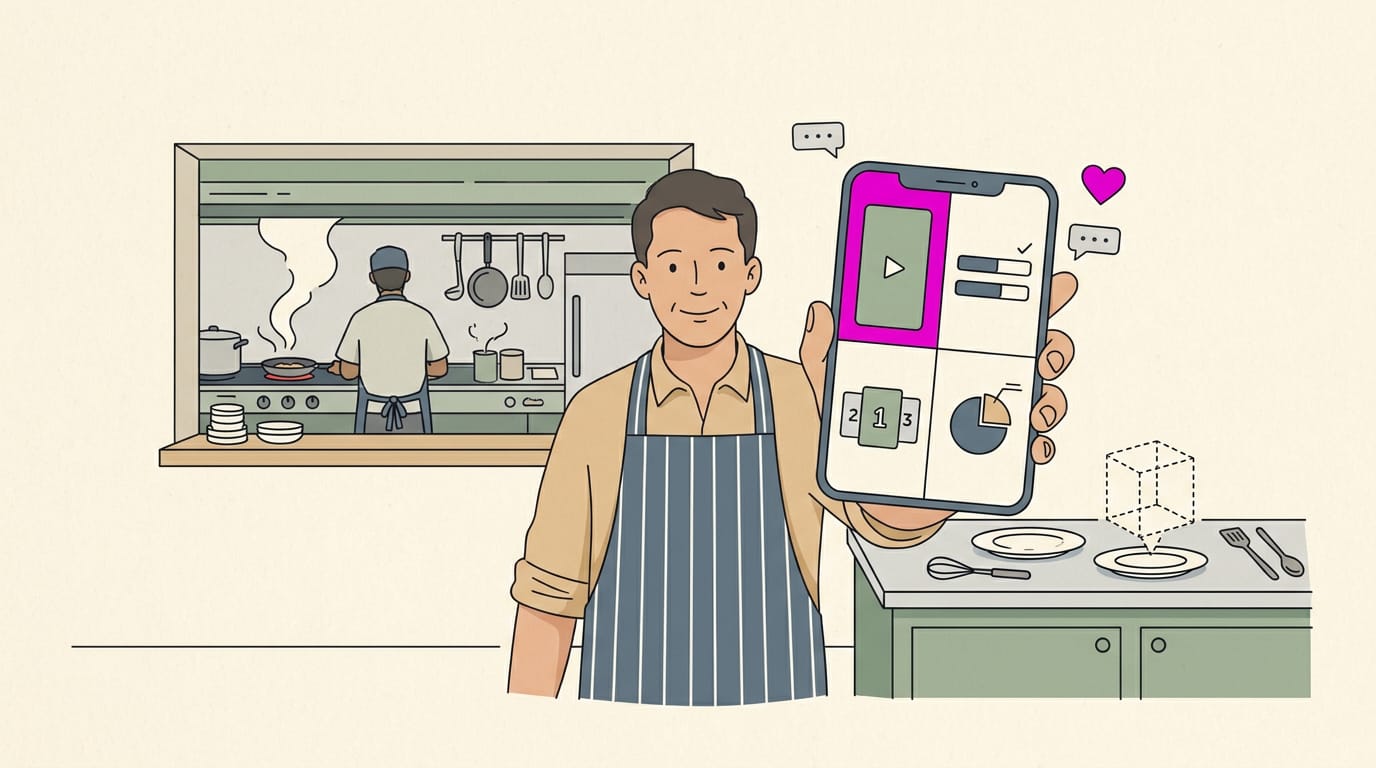
A carousel is a set of images people swipe through, ideal for step-by-step guides. Infographics pack one fact into a picture, and memes work when they’re light.
Augmented reality (AR) overlays digital objects on a camera view, and 360-degree video lets viewers look around a space. Treat these as a bonus once your map listing and website are in order.
Letting customers and staff promote you
Ask for user-generated content (UGC), the posts customers make about you. A sign inviting people to tag you can be enough.
Staff and regulars are advocates too. A stylist sharing her work brings real faces to your page.
A customer’s photo captioned ‘Best haircut in town’ works as a testimonial once you have their permission.
Always credit creators, and ask before you repost, not after.
Choosing hashtags that actually fit
Keep every tag tied to the post:
- Relevant, not arbitrary. An oil-change photo belongs under an oil-change tag.
- Limit the number. A few fitting tags look considered; a long block looks like spam.
- Niche over generic. #kitchenremodel reaches people ready to hire, while #home gets lost in the crowd.
- Trending hashtags. Use them only when they honestly fit your business.
- Find tags through influencers. See which tags local creators and nearby businesses use.
- Location tags and local hashtags. Tag your location and add your town as a hashtag. A homeowner searching for a plumber nearby is exactly who you want. Local beats loud.
Tailoring posts to specific audiences
Segment followers by age and location, so a gym speaks to commuters and parents differently. Let platform insights show who engages, and shape your next post around it.
A buyer persona is a short profile of your typical customer. A dental clinic might picture the busy parent scrolling at bedtime, then write for her questions.
Sound like yourself everywhere. One voice beats a different character on each platform.
Making every post accessible to everyone
Alt text describes an image for screen readers, software that reads aloud for people who can’t see it. Captions help people who are deaf or hard of hearing follow your videos, and anyone watching in a noisy shop.
Show real customers and staff of different ages, backgrounds, and abilities, so more people see themselves in your business. Post key hours and services in the other languages your customers speak. Clarity serves everyone.
Getting Your Profiles and Accounts Right
Before you post, make sure the profiles people land on are working for you. Here’s how to set them up.
Must-have details for every profile
Start with a keyword-rich bio that uses the words customers actually type, like “emergency drain cleaning” for a plumber. Add a professional profile picture and a branded cover photo of your real shop or van.
Fill every field, from hours to service area, since blanks look unfinished. Then pin your best post, like a recent before-and-after, and use highlights for prices and booking details.
Keep your details and links consistent
Use the same name, phone number, and address on every platform, and claim matching handles wherever you can. Add a call to action link in your bio, like “Book a cleaning,” so visitors know what to do next.
Link your website from every profile and link your profiles to each other, since your website and map listing should always come first.
Upload images at each platform’s recommended size so your logo doesn’t get cropped, then verify your profile where the platform offers it.
Helping people find you through search
Start with keyword research, which just means listing the words customers really use at the counter and in search.
A bakery owner who hears “gluten-free birthday cake” every week can put that phrase in her bio and captions, so the next person searching for one finds her. Work those phrases into bios and captions, but keep it subtle.
Natural beats packed, so avoid keyword stuffing, which means cramming terms in until the text reads like spam.
Tailoring each profile to its platform
Treat each profile as a micro-site, a small version of your website with one job: tell visitors who you are and prompt one action. Tailor the tone and calls to action for each platform.
A restaurant might share daily specials with a reservation link, while a service van asks for quote requests. Then choose two to three platforms where your customers already spend time, and keep them fresh rather than abandoned.
We’d rather see two active accounts than five neglected ones. Fewer, better.
Working with Algorithms and Your Community
Algorithms decide who sees your posts, but your community decides whether they act.
What makes algorithms favour your posts
Platforms rank posts using a handful of signals:
- Early engagement. Likes, comments, and views soon after posting tell the platform a post is worth showing more widely.
- Watch time and dwell time. Time people spend with your video or post signals real interest.
- Saves and shares. Keeping or passing along your post means people are vouching for it.
- Native content. Posts made for the platform itself, not links from elsewhere, also help.
- Reply velocity. How quickly people respond to a post can be an engagement signal that algorithms consider, according to Social Media Today’s coverage of X’s ranking factors.
Algorithms can work for you too, since real conversation reaches people who don’t follow you yet.
Replying and engaging with followers
Speed matters. A bakery owner who asks which cake flavour to make next can reply to every comment while the post is fresh, and those replies turn into orders. Answer complaints kindly and publicly, then continue in a direct message.
That’s social customer service: everyone scrolling past sees how you handle it.
The 5-5-5 rule is an easy daily routine: five minutes, five replies, and five comments on others’ posts. Ask happy customers to tag or share your posts.
How much should you post about yourself? The 5-3-1 rule suggests, for every nine posts:
- five shares of others’ useful content
- three of your own
- one direct promotion
Less selling, more sharing.

Listening to conversations and joining groups
Monitor brand conversations by searching your business name weekly, so you catch problems early. Join niche groups and local threads on Nextdoor, the neighbourhood network, and help before you pitch.
Build a sense of belonging by showing up as a neighbour, not a billboard. A salon owner who hears three clients ask for Sunday slots can test them for a month and let bookings decide.
Partnering up and using platform tools
Tag partners like the florist who helped with a wedding, and they may share it with their followers. Local creators whose followers live nearby are a good fit for influencer collaboration.
Use polls to choose a menu special, or go live from the kitchen for a few minutes. Add share buttons to your website so visitors can pass along a great review.
Picking the Right Platforms for Your Goals
Every platform wants your time, so pick by where your customers already look and how many hours you can really give. Start with your map listing and reviews, then add social.
What are the 7 types of social media?
Here are the main options:
- Map listing and reviews. These get a nearby customer to call, so start here.
- Facebook for community. Suits regulars, neighborhood groups, and event news.
- Instagram for visual storytelling. Strong when your work photographs well, like a finished kitchen.
- LinkedIn for business-to-business (B2B) sales. Best when your customers are other companies.
- X for thought leadership. Short posts that share your expertise.
- Pinterest for evergreen discovery. Pins keep getting found long after you post them.
You don’t need every one. Choose by who you’re reaching, not by which app is newest. Think of a dog groomer who posts Saturday openings on Facebook, where local owners already swap recommendations, and skips LinkedIn entirely.
That’s an hour a week back for the grooming table.
Why is Gen Z quietly leaving? It’s not necessarily a walkout. A study in BMC Psychology of Generation Z users in Shenzhen, China, found that they can experience social media fatigue, which may affect how they use social platforms.
Selling products directly on social platforms
Some platforms let people buy without leaving the app:
- Shoppable features. Tag products in a post so viewers can tap for details.
- Live streaming with shop now. Let viewers buy items during a live video.
- Selling directly on social. Customers check out inside the app, not on your website.
- Digital storefront on Facebook and Instagram. A catalog people browse anytime, in one place.
Consider a florist who lists this week’s arrangements in a Facebook storefront, so customers can order on the drive home instead of calling while the shop is busy.
Measuring Results and Tracking Every Click
Posting is only half the job. Here’s how to measure it.
Setting goals you can measure
Start with SMART goals: Specific, Measurable, Achievable, Relevant, and Time-bound. “More followers” is a wish. A set number of calls each month is a goal you can check.
Then choose KPIs (key performance indicators, the numbers that track progress) by objective: reach for awareness, calls for bookings.
Engagement (likes, comments, shares) shows people noticed. Conversion (a call, booking, or visit) shows they acted. Conversion fills the calendar, so treat likes as a warm-up.
Benchmarks are reference points, starting with your own past numbers. Then calculate ROI (return on investment) by comparing what social brought in with what it cost you.
Finding what works with analytics tools
Sort your posts by reach, saves, or booking messages to find your best-performing content. A salon owner who sees haircut photos win more booking messages than product shots posts more haircut photos.
Share of voice is your slice of online conversation compared with rivals. Competitor analysis shows what nearby shops post and what earns replies.
Social listening tools flag mentions of your name or town so you can reply fast. AI insight tools (artificial intelligence software that summarizes your numbers and flags patterns) help, but you’ll still judge what they mean.
Seeing which links get the most clicks
UTM parameters (small tags added to a link’s address) show which platform sent each click, so you’ll know where bookings come from.
Top-clicked links show what people actually tap, so lead with your strongest offer. A plumber’s emergency drain post should link to the landing page (the first page a click reaches) for that service, not the homepage, so booking takes one tap.
Numbers only matter when they change what you do next.
How Social Media and SEO Work Together
Social media and search engine optimisation (SEO) reach the same customers, but they don’t work the same way.
How social activity indirectly helps rankings
Googlers have consistently said that likes, shares, and followers aren’t a direct ranking factor, as a roundup of statements from Matt Cutts, John Mueller, and Gary Illyes shows.
So social media optimisation (SMO) helps indirectly, by putting your name in front of people who then search for you.
Social signals, such as likes and comments, won’t lift your rankings on their own. The goal is less about follower counts and more about recognition. A hair salon that posts a before-and-after photo weekly soon hears neighbors mention its name.
Links shared on social platforms are commonly marked nofollow, a tag that tells search engines not to pass ranking credit. A Google Search Central Community thread notes that most platforms add it automatically.
Treat a social link as traffic, not a ranking boost.
A backlink is a link from another website to yours. Think of a bakery owner who posts a clear guide to holiday cake orders. A local blog might link to it when readers need that answer. Write posts worth referencing.
Lining up your social and search plans
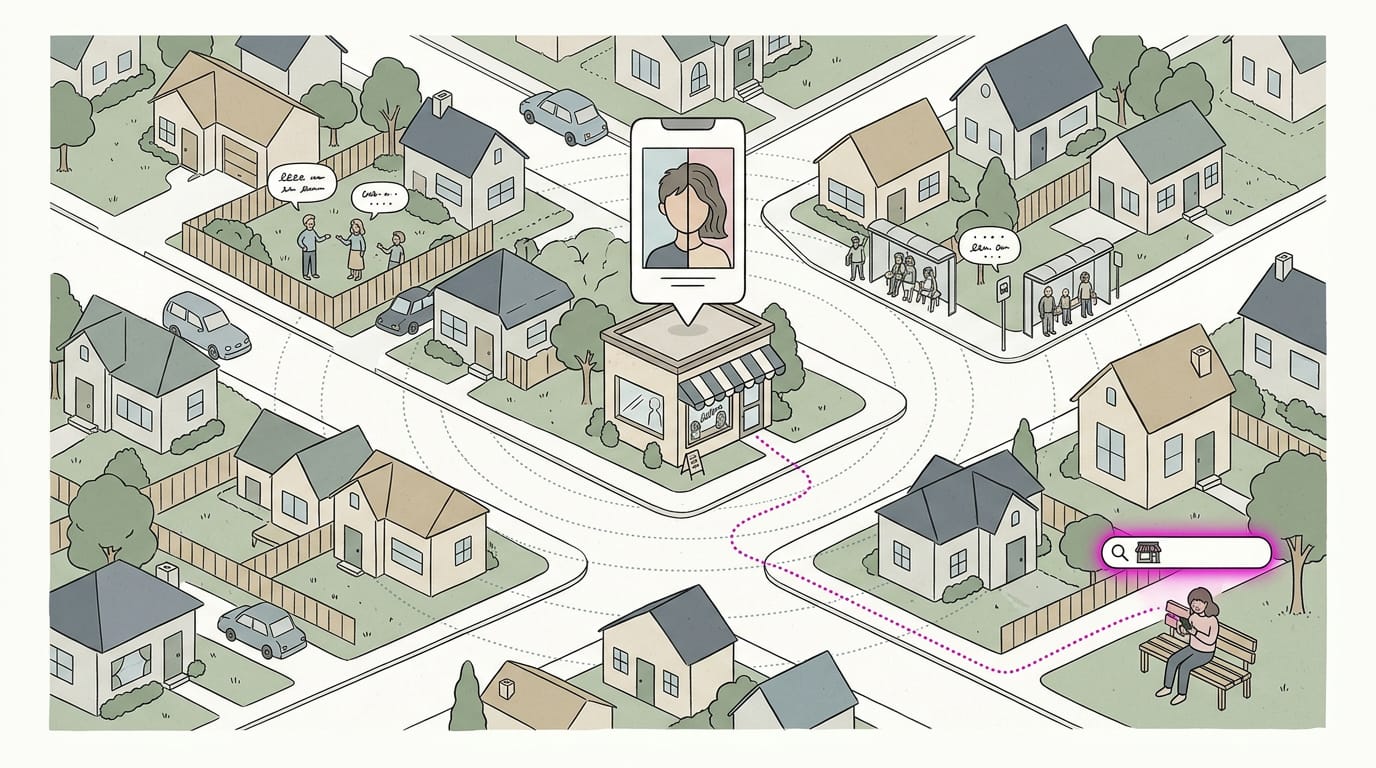
Use the same keywords, the words customers type, across your site and posts. A plumber’s water heater repair page should match the post promoting it. Social profiles can appear in Google results, so keep your name, phone, and hours identical everywhere.
SMO and SEO complement each other: social helps people remember you, while SEO helps them find you. As artificial intelligence (AI) changes how people search, consistent details matter more, so we’d keep your website and map listing ahead of social.
Where Paid Social Ads Fit In
Paid ads are the fast lane of social media, but they work best on top of the groundwork you’ve already laid.
How organic and paid social differ
Organic social is unpaid posting on your own profiles. It builds slowly, but it keeps working long after the post goes up. Paid social is ads you pay to show a chosen audience. It works fast, and it stops when the budget does.
Think of a dental office posting tips each week. Regular patients share them, and new families find the page on their own. A paid ad can reach local parents by Friday, but its reach ends when the spending does. Paid ads rent attention.
Organic is the foundation; paid is the acceleration.
The two work best together. A paid campaign sends people to your profile, so keep your map listing, reviews, and website ahead of social.
Tactics to improve your paid social ads
- A/B testing. Show two versions of an ad that differ in one thing, like the photo, then keep the one that performs better.
- Custom and lookalike audiences. Build a custom audience from your customer list or people who engaged with your page, then add a lookalike audience of new people who resemble them.
- Retargeting. Show ads only to people who already visited your website or viewed your profile. A plumber’s ad can remind a browser of the emergency repair page.
- Custom landing pages. Send each ad to a landing page built for that offer, not your homepage. A salon’s spring cut ad should lead to a booking page for that cut.
- Exclude existing customers. Remove current clients from prospecting audiences so your budget reaches new faces.
- Combine paid with organic. Boost posts that already drew real comments, since an ad backed by genuine engagement earns more trust.
Services, Timelines and Mistakes to Avoid
Outside help can save hours, but only if you know what you’re buying. Fix your map listing, reviews and website first, so social has something solid to build on.
Hiring help from agencies and marketers
A social media optimisation (SMO) agency manages your profiles, posts and replies. Think of a dental office with no one free midweek: the agency keeps its feed alive between cleanings.
A freelance or in-house marketer can work too, so before you sign with either, ask:
- Can they show case studies from businesses like yours, naming the goal and what changed in calls or bookings?
- Do they push their own scheduling tools, and do they earn anything if you buy one?
- Who owns the logins, and can you get them back if you part ways?
Expected timelines and common mistakes
Within the first month, early wins look like engagement rather than revenue. Don’t expect a flood of bookings yet, just a few comments and profile visits.
A study on posting consistency describes it as sharing a steady volume of content at regular intervals, a practice practitioners widely advocate for follower engagement. Picture a plumber who posts one tip each Monday, then vanishes at the summer rush.
When a pipe bursts in autumn, the plumber who stayed visible gets the call. Consistency wins.
Keep the schedule steady, but vary the content. Posting the same offer every week tends to make people scroll past, so rotate formats, like a before-and-after photo.
Bad reviews and comments will happen, so write a crisis plan now that names who replies and how fast. A calm reply shows future customers how you handle problems.
Social media optimisation isn’t about chasing every new app or posting around the clock. It’s about making each profile clear, each post useful, and each account easy to act on.
Pick the one or two platforms your customers really use, and give them steady attention.
Keep your map listing, reviews, and website strong first, since they do the heavy lifting. Then let social add the personality that keeps people coming back. The bakery that wins isn’t the one with the prettiest feed.
It’s the one customers can find, trust, and call.
References
- Full article: Steady posts, stronger bonds? Examining posting consistency and follower engagement for content creators — tandfonline.com (2026)
- Social media overload, fatigue, and discontinuance intention among Generation Z Douyin users in Shenzhen, China: A cross-sectional structural equation modelling study | BMC Psychology — link.springer.com (2026)
- When Words Meet Visuals: How Content Composition Drives Social Media Engagement for Marketer-Generated Content - Ivy Chu Dang, Canice M.C. Kwan, Jayson S. Jia, Yang Shi, 2026 — journals.sagepub.com (2025)
- Everything Google says about “Social Signals” In SEO from Matt Cutts, John Mueller, Gary Illyes (Official) — primaryposition.com (2026)
- Social Media Backlinks Not Showing in GSC — support.google.com (2025)
- X Shares Insights Into Key Factors That Dictate Post Reach — socialmediatoday.com (2025)
Questions
What is the 5 5 5 social media strategy?
The 5-5-5 social media strategy is a simple daily engagement routine: spend five minutes, write five replies, and leave five comments on other people’s posts. It helps you participate in conversations rather than only publishing your own content.
What is the difference between SMO and SMM?
SMO, or social media optimization, improves social profiles and posts to increase visibility, engagement, and actions such as calls or bookings. SMM, or social media marketing, is the broader use of social platforms to promote a brand, often including content, community management, and paid advertising.
What is optimization in social media?
Social media optimization means deliberately improving your profiles and content so the right people can find you, engage, and take a next step. It can include clear profile details, useful posts, timely replies, suitable platform features, and tracking results.
What is the 5-3-1 rule on social media?
The 5-3-1 rule is a nine-post mix: share five pieces of useful content from others, publish three of your own posts, and make one direct promotional post. It balances sharing and promotion so your feed is not dominated by sales messages.
What is SEO in terms of social media?
SEO in relation to social media means coordinating social profiles and posts with search engine optimization, for example by using consistent business details and relevant keywords. Likes, shares, and followers do not directly raise Google rankings, but social activity can build recognition and lead people to search for your business.
What are the 7 types of social media?
Common types include social networking platforms, image- and video-sharing platforms, discussion forums, blogging and publishing platforms, social bookmarking and content curation sites, review networks, and messaging or community platforms. Businesses can also use map listings and review services to help local customers find and contact them.
Why is Gen Z quietly leaving social media?
Some Gen Z users may reduce their social media use because of fatigue or overload, rather than leaving in a single coordinated wave. A study of Gen Z users in Shenzhen, China, found that social media fatigue may affect how they use social platforms.
Does SEO work for social media?
SEO can support social media efforts, but social engagement alone does not directly improve Google rankings. Social profiles and posts can help people discover and remember a business, drive visits to its website, and potentially attract links from other websites.
Sources
- Everything Google says about "Social Signals" In SEO from Matt Cutts, John Mueller, Gary Illyes (Official), primaryposition.com,
- Social Media Backlinks Not Showing in GSC - Google Search Central Community, support.google.com,
- Full article: Steady posts, stronger bonds? Examining posting consistency and follower engagement for content creators, tandfonline.com,
- Social media overload, fatigue, and discontinuance intention among Generation Z Douyin users in Shenzhen, China: A cross-sectional structural equation, link.springer.com,
- X Shares Insights Into Key Factors That Dictate Post Reach | Social Media Today, socialmediatoday.com,
- When Words Meet Visuals: How Content Composition Drives Social Media Engagement for Marketer-Generated Content - Ivy Chu Dang, Canice M.C. Kwan, Jayson S. Jia, journals.sagepub.com,