4 Ps of Marketing: Product, Price, Place, Promotion
The 4 Ps of marketing explain why two bakeries with equally good bread get different results. See how product, price, place, and promotion work together.

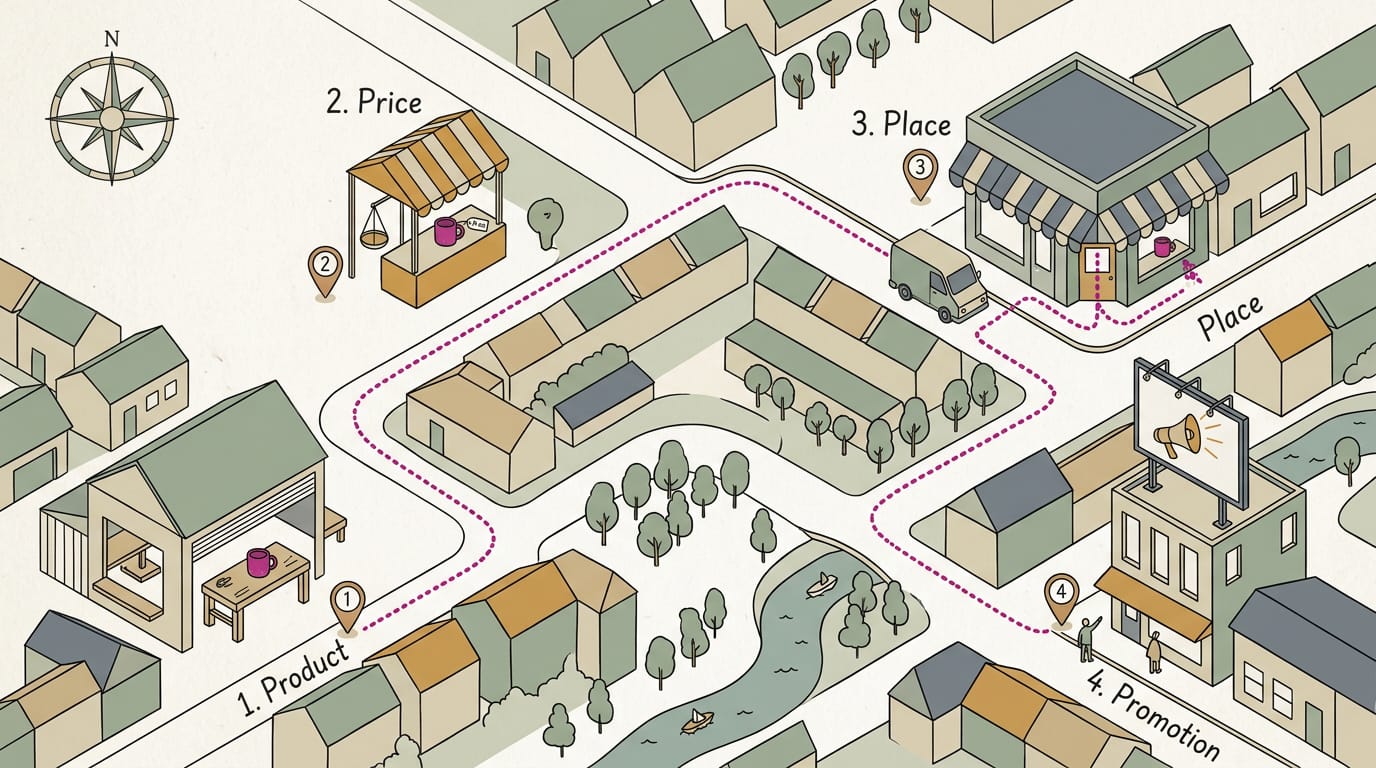
The 4 Ps of marketing are the four decisions that shape how customers choose a business: what it offers (product), what it charges (price), where customers can buy it (place), and how people hear about it (promotion). Start with customer needs, then make each choice support the others, from pricing and access to clear, helpful messaging. A consistent mix helps customers find, understand, and choose your offer, while focusing on the weakest P gives you a practical place to improve.
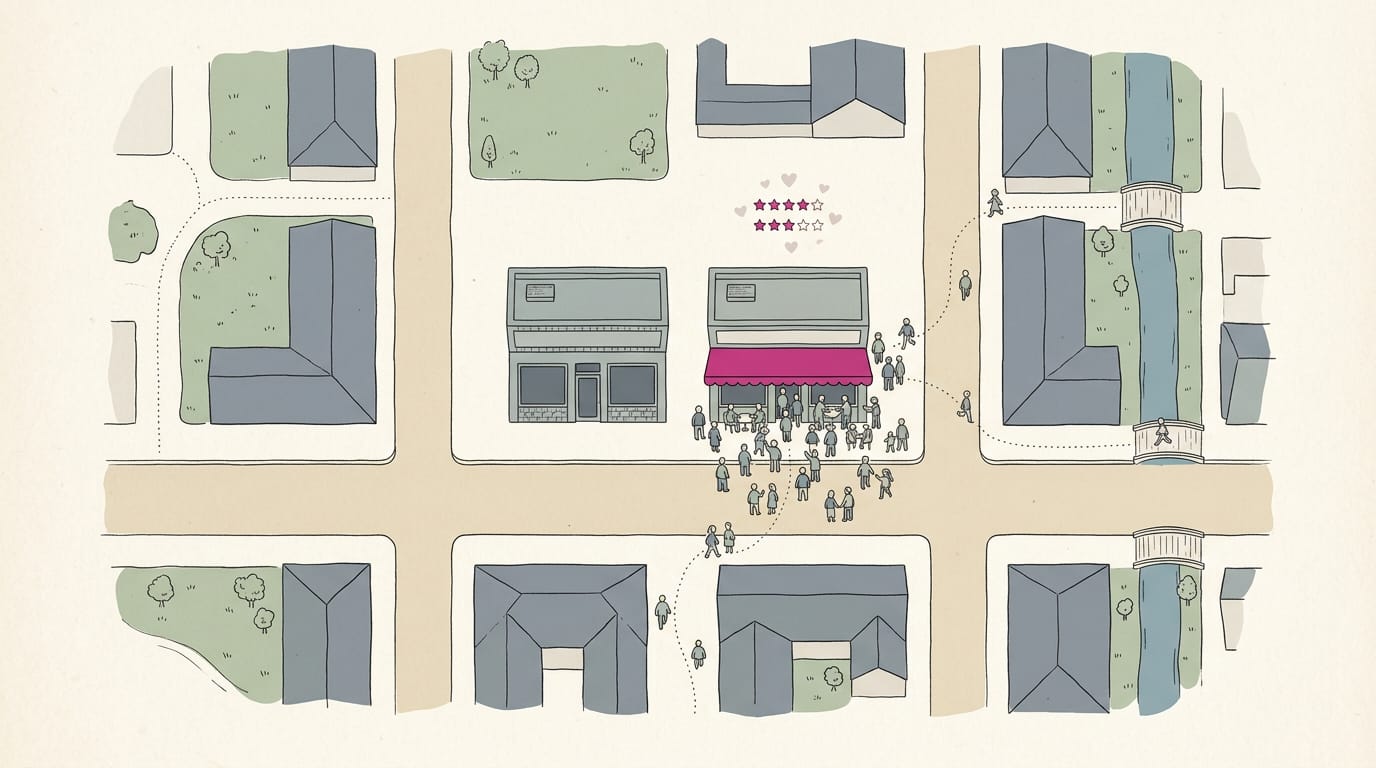
Picture two bakeries on the same street. One has great bread, a fair price, and a sign you can spot from the bus stop. The other has bread just as good, but almost nobody knows it’s there. The gap usually comes down to four decisions.
Those decisions make up the 4 Ps of marketing: product, price, place, and promotion. We’ll break down each one, show how they depend on each other, and walk through how a local business can use them on a small budget.
Why the 4 Ps of Marketing Matter
Marketing can feel big and fuzzy, but the 4 Ps give you a simple way to sort it out.
What are the principles of marketing?
Marketing is how you help the right people find and choose your business. The principles of marketing are the core ideas behind that work, and the 4 Ps are their best-known shorthand:
- Product: what you offer
- Price: what you charge
- Place: where customers get it
- Promotion: how you tell people about it
These are controllable strategic levers and the foundation of your strategy: choices you make, not things that happen to you. Each is also a customer-centered decision area, so start with what your customer needs.
Picture a bakery owner whose regulars keep asking for weekend cakes. A simple order form and a sign by the register keep those orders from slipping away.
Where McCarthy’s model came from
According to a chapter on the marketing mix, McCarthy presented the 4 Ps in his book Basic Marketing, and they’re “perhaps one of the best known concepts in marketing.” Apparently first described in 1960, the idea is over 60 years old.
It was built for brick-and-mortar stores, long before online shopping.
How the marketing mix evolved
The 4 Ps grew out of the older idea of the marketing mix: the blend of tools a business uses to reach customers.
In 1948, James Culliton described a marketing manager as a mixer of ingredients who sometimes follows others’ recipes, sometimes writes their own, and sometimes adapts one with what’s on hand.
In Dawn of the digital age and the evolution of the marketing mix, Borden’s mix included 12 elements, from product planning and branding to advertising and fact-finding. McCarthy simplified that long list to four: product, price, place, and promotion.
In short, the marketing mix is the whole toolbox, while the 4 Ps are the shortlist that’s easiest to remember.
Who uses the framework
Marketing managers, strategists, and campaign leads use the 4 Ps to plan campaigns. It works for goods, services, and subscriptions, and across industries.
Take a salon owner. She asks the same four questions: what she offers, what she charges, where clients book, and how she tells people about it. Answer them well, and fewer chairs sit empty on a Tuesday. Same framework, different shop.
Breaking Down Each of the Four Ps
Each P answers a question your customer is asking: what’s in it for them, what it costs, where to buy, and how they’ll hear about you.
What your product actually offers
A tangible offering is something customers can hold. An intangible offering is a service, like a haircut. Customers buy results, so start with their needs. Features describe what’s included, while benefits describe what it does for them.
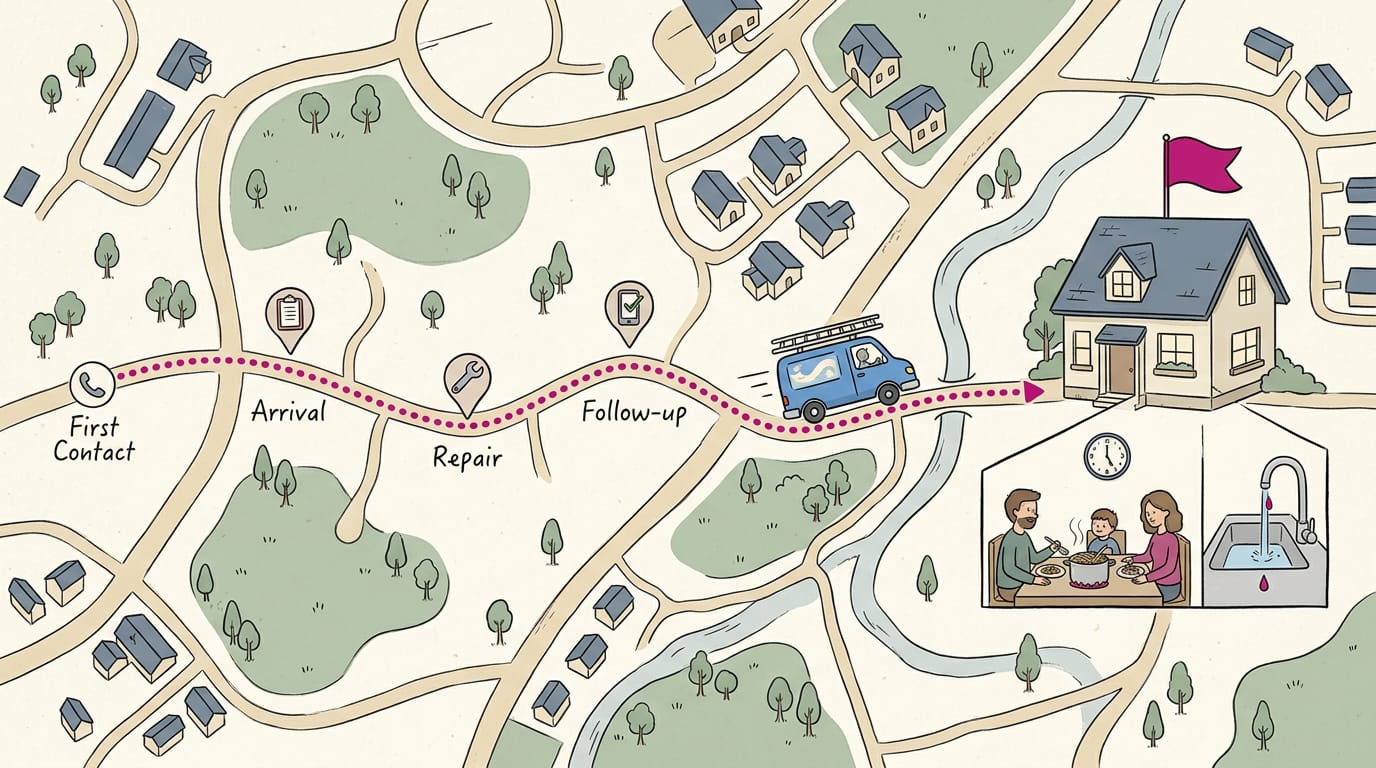
Same-day service is a feature. Getting your sink working before dinner is the benefit.
Map the whole customer experience, from first call to follow-up, then name your differentiation: what rivals can’t claim.
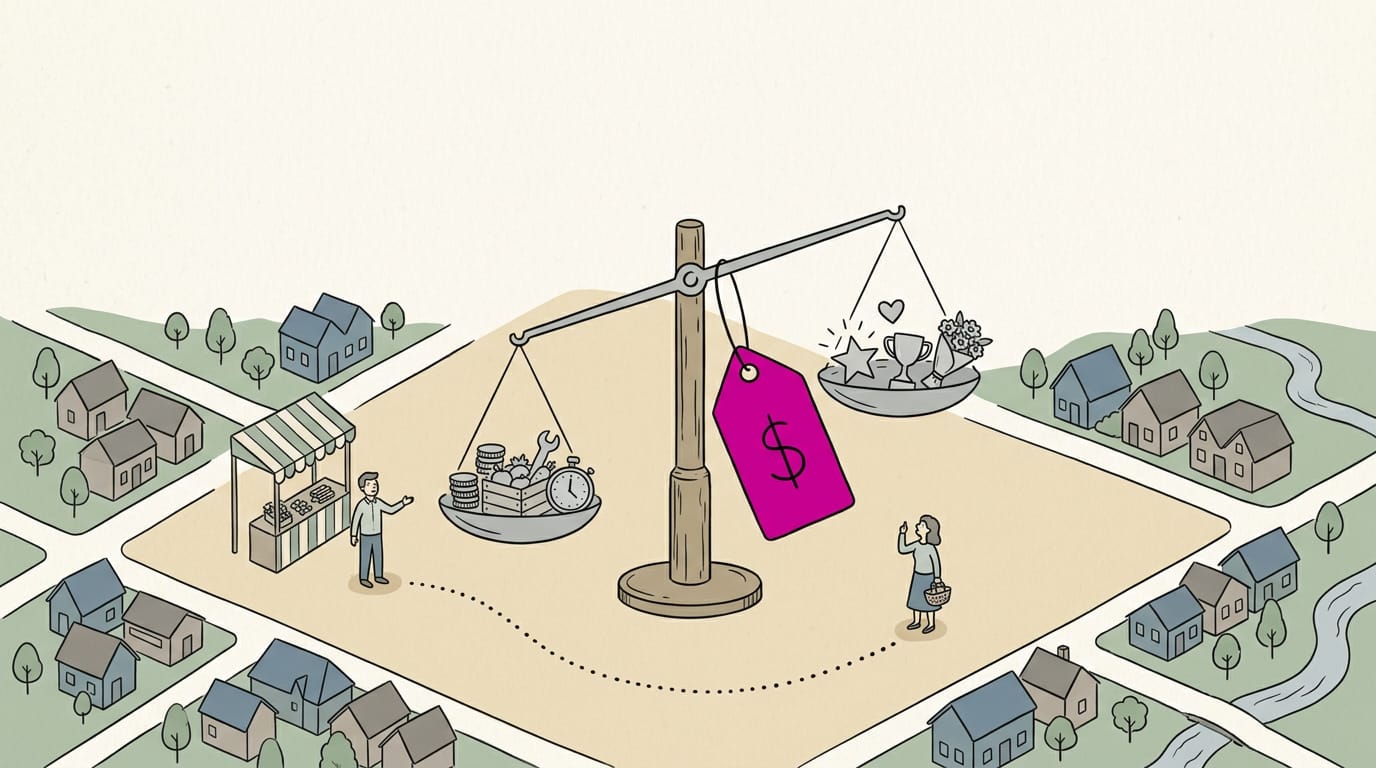
How to set the right price
Value perception is what customers believe they’re getting, and positioning is where you sit in their minds. Compare competitors first: a low number can suggest a bargain, while a high one suggests quality.
Here are four common approaches:
- Cost-plus pricing: your costs plus a set markup.
- Value-based pricing: tied to what the result is worth to them.
- Penetration pricing: start low to win customers, then adjust.
- Premium pricing: charge more to signal top quality.
Dynamic pricing shifts with demand or season, so tell regulars why. A subscription is a recurring fee, freemium offers a free basic tier with paid upgrades, and bulk pricing rewards bigger orders.
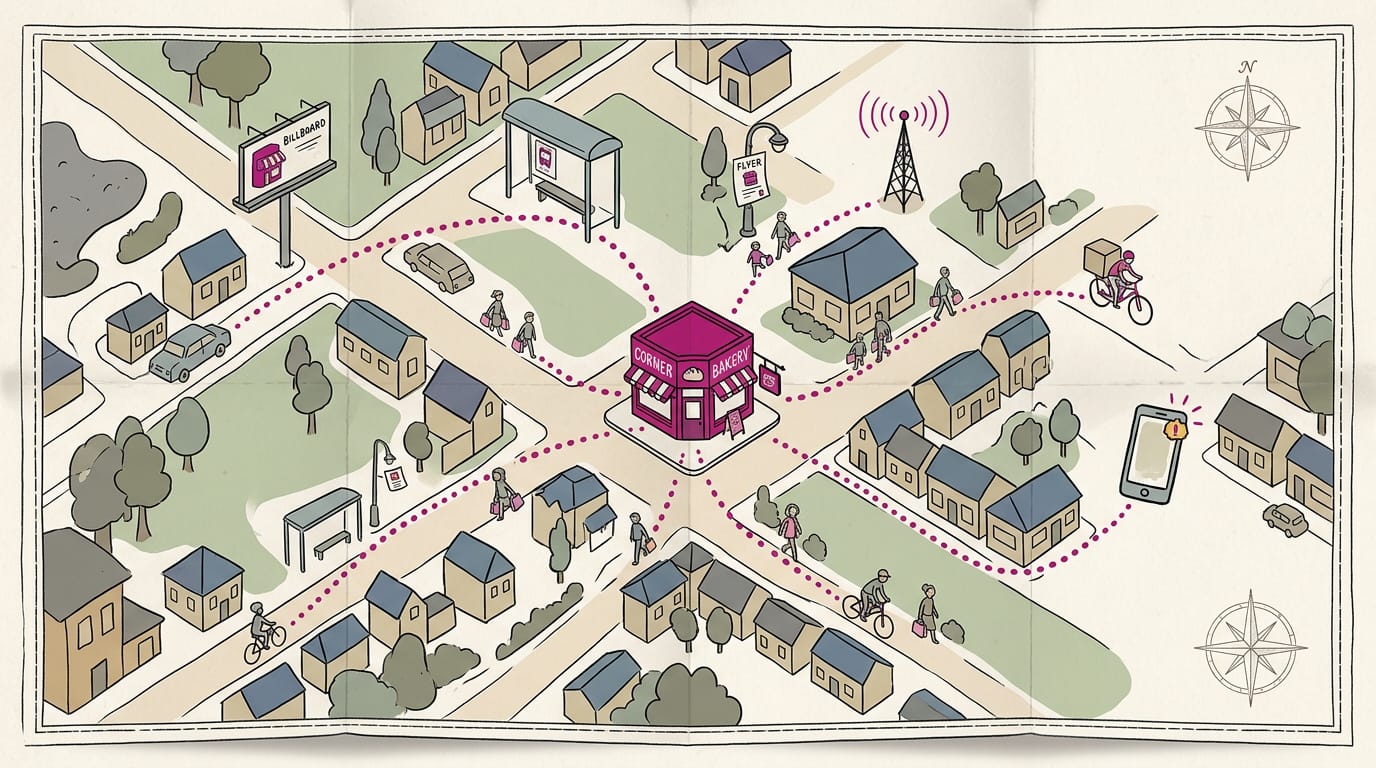
Where and how customers buy
Place is about access. Distribution channels are the routes to you, like a storefront, a van, or a booking page. An omnichannel approach links physical and digital channels, so customers never start over.
Regional reach sets your boundaries, and shopping habits, like phone searches, decide which channels win.
Your map listing, the profile that appears when someone searches nearby, is your digital storefront. A plumber whose listing shows the right service area and phone number gets the late-night call. Keep it current.
How to get the word out
Promotion includes:
- advertising (paid messages)
- public relations (local news mentions)
- content (helpful posts)
- sales (direct conversations)
Paid media is what you buy, owned media is what you control, and earned media is what others say, like reviews. Digital and traditional channels both count, but reviews and a plain website come before social posts.
Match messaging to price and place: a premium price on a clip-art flyer sends mixed signals. Personalization driven by artificial intelligence (AI) tailors messages to each customer, but it’s a later step.
How the Ps Depend on Each Other
Product, price, place, and promotion are tightly linked, and we’ll show you how a change in one shows up in the others.
Why all four Ps work together
The marketing mix is all four Ps used together to shape one offer. You use it to decide how customers find you, what they pay, and why they choose you.
Changing one P affects the others. Raise your price, and your promotion has to explain why it’s worth more.
Neglecting one P unbalances the mix. Excellent bread sold at a tucked-away stall with no sign or listing will struggle to draw customers.
Picture a plumber with fair rates and an on-time crew but a listing that never names the neighborhoods they serve. Calls only come from people who already knew them. Instead of asking which P matters most, ask how well all four support each other.
Why product shapes the other Ps
Your product drives the other three Ps. What you make and how well it works shapes what you can charge, where you sell it, and what you say about it.
A premium product needs a premium price. Top-grade materials and careful work priced like a budget option send mixed signals, and promotion then has to work harder to undo them.
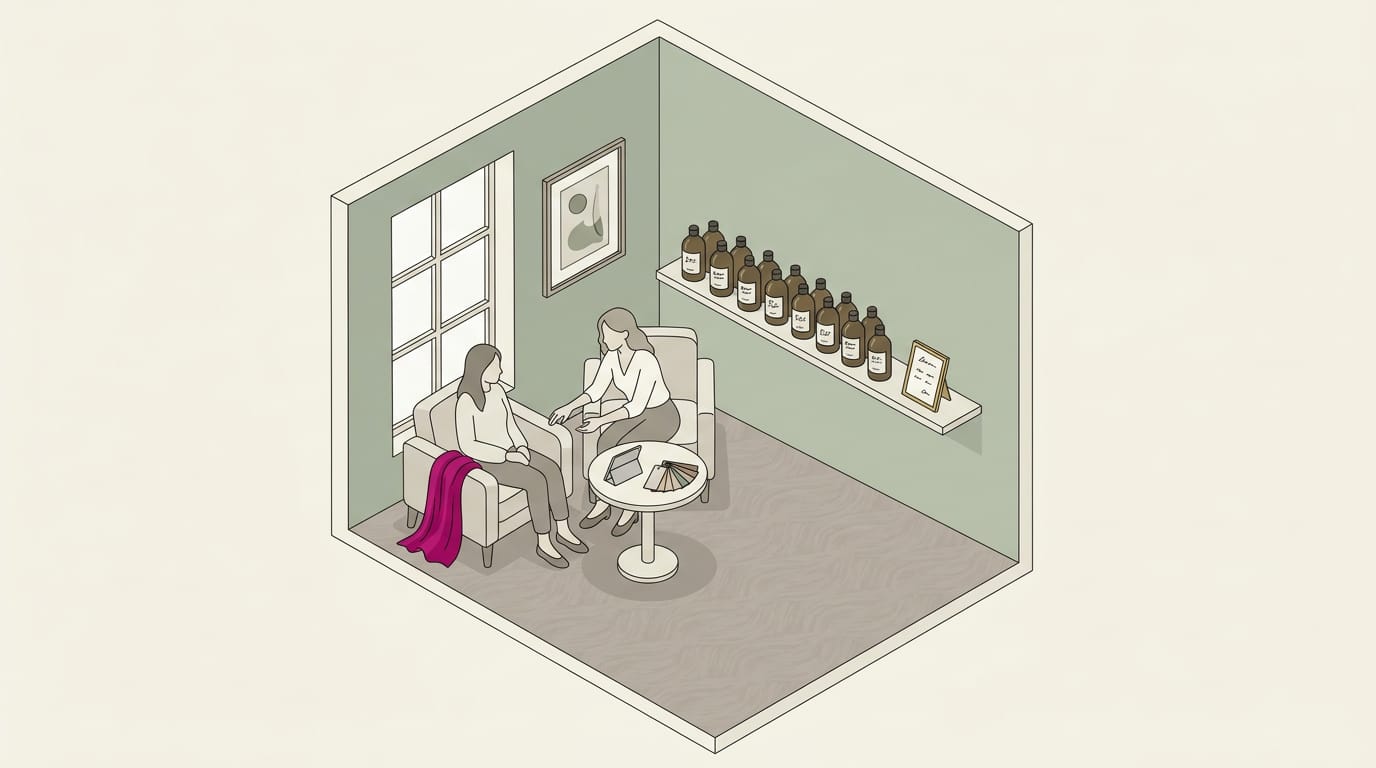
Luxury positioning is the clearest case. Picture a boutique salon that uses premium products, books one client at a time, and offers long consultations.
Its higher prices, calm studio, and polished photos all say the same thing, so clients know exactly what they’re paying for.
Keeping the 4 Ps Relevant Online
The four Ps still work, but digital tools have changed what each one looks like.
The principles still hold up
The four questions haven’t changed: what you offer, what it costs, where people find it, and how you tell them about it. The framework is flexible enough for a corner shop, a clinic, or a web app alike.
It also applies to SaaS (software as a service, sold as an online subscription) and other digital products.
How digital changed each P
Each P picked up new forms:
- Product: It can now be intangible, like a booking tool. A salon with online booking can take an appointment at 10pm.
- Price: Dynamic pricing lets rates shift with demand, and subscription pricing swaps one-off fees for monthly payments. A gym selling monthly memberships is one example.
- Place: It’s less about the street address and more about where people look, including your website and social commerce (buying straight from a post).
- Promotion: It now happens through content, like posts and short videos, and automation, like an automatic text asking for a review.
Why buyers now call the shots
Buyers can walk away in seconds, so pushy ads lose their pull. Stay relevant by helping people decide, not shouting about yourself. Consider a bakery owner who posts Friday’s pie flavors and the pickup cutoff.
Fewer questions reach the phone, and orders come in before the Saturday rush. Helpful beats loud.
Someone searching for a bakery at 9pm on a Sunday can find you while you’re closed, so your listing keeps working around the clock. Aim at likely buyers, like past customers and nearby searchers, not everyone in town.
Putting the 4 Ps to Work
Knowing the 4 Ps is one thing. Using them on a small budget is where most local businesses get stuck.
Audit your current marketing mix
Name your current marketing mix and the assumptions behind it, like “word of mouth covers it.” Ask each P:
- Product: Do customers get what they expected?
- Price: Do quotes turn into jobs?
- Place: When someone searches nearby, do they find you?
- Promotion: When did you last ask for a review?
Then pick your weakest P, the one a fix would help most. That’s where we’d start.
Gather data and plan each P
Ask recent customers how they found you and why they chose you: that’s a customer survey, the simplest market research you’ll do.
Check what each job costs you, and who shows up on the map when you search nearby.
Choose a pricing model you can explain in one sentence, plus the channels customers already use: your listing, reviews, and a plain website. Use the same name, services, and phone number everywhere, so customers hear one story.
Take a plumber with an out-of-date map listing and no recent reviews. Her weakest P is Place, so she fixes the listing first, then asks each finished customer for a review. Now a 9pm search for “plumber near me” finds her.
Align, test and track results
Make the four Ps add up to one integrated strategy, aiming for consistency more than perfection.
Run an A/B test (comparing your current version against one change) on one P at a time.
Track one number per P:
- Product: repeat bookings
- Price: quotes that become jobs
- Place: calls from your listing
- Promotion: new reviews
Review quarterly: check the numbers, pick your weakest P again, and make one change.
Real Brands and Tactics to Learn From
Big brands make the four Ps look easy, and each holds a lesson you can scale down.
How famous brands use the Ps
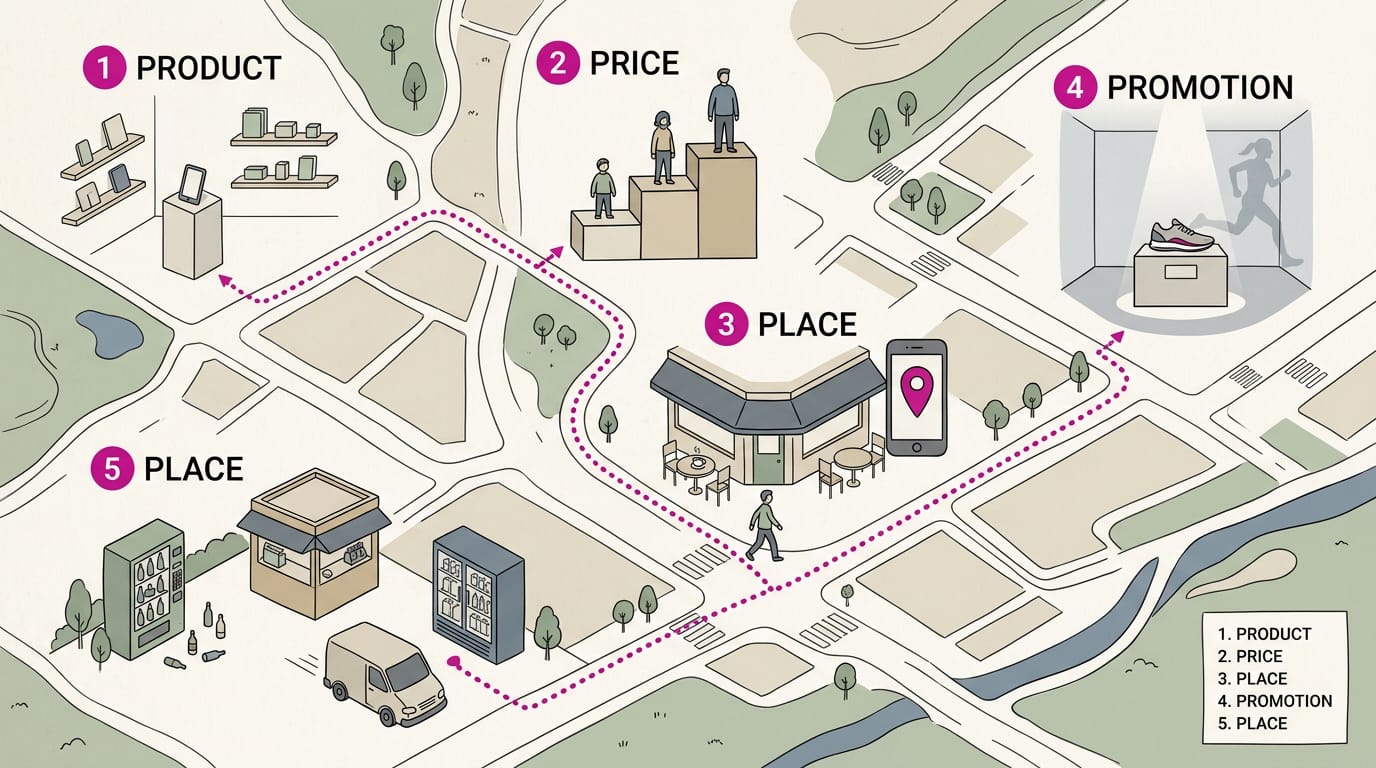
- Apple (Product): A focused lineup makes every release easy to understand.
- Netflix (Price): Tiered pricing lets each viewer pick the cost that fits.
- Starbucks (Place): Locations and mobile ordering meet customers where they already are.
- Nike (Promotion): Emotional branding sells an identity, not just a product.
- Coca-Cola (Place): Wide distribution puts the product within easy reach.
Don’t copy their budgets. Notice how each P does its job.
Tactics you can use for each P
- Upsell and cross-sell (Product): Offer a bigger size or add-on at the point of sale, like a tire rotation with an oil change.
- Personalized emails and CRM ads (Promotion): Customer relationship management (CRM) tracks who buys what. According to an article on personalisation and CRM, wider personalization improves CRM efforts in up-sell and cross-sell offers.
- Freemium and bulk pricing tiers (Price): Freemium offers a free basic version with paid extras. Think of a bakery with an office bulk rate, so one weekly order replaces five small ones.
- Omnichannel (Place): Your map listing, website, phone line, and counter should give the same experience. Forrester’s omnichannel results point the same way.
Example scenarios from real businesses
- UK FinTech launch: Financial technology (FinTech) launches remind us that a new product only helps people who can find it.
- Restaurants and luxury going online: Can a diner or shopper find your menu or prices on their phone in under a minute? That beats a fancy homepage.
- Regional UK channel gaps: Picture a plumber listed in one town’s directory but missing from the next village’s. Each gap is a call you never see.
Other Frameworks Beyond the 4 Ps
The 4 Ps are a solid start, but they aren’t the only way to organize marketing. They describe what you offer, not how customers experience it, so we’ll look at frameworks that fill that gap or flip the view to the buyer.
What is the fifth P in marketing?
The fifth P is people: the staff who greet and serve customers. Two more, process (how customers move through your service) and physical evidence (what they see and touch), complete the extended mix. It suits service businesses best.
Picture a dental office, where the receptionist’s greeting and how easily someone books a cleaning shape whether patients return. Customers notice every detail.
Extend beyond the 4 Ps when your customers spend real time with your staff or process. Ignoring those pieces leaves the part of the experience that drives repeat visits unmanaged.
The 4 Cs from the buyer’s side
The 4 Cs flip each P to the customer’s view:
- Consumer: the customer’s needs and wants
- Cost: what they give up to buy, time included
- Convenience: how easily they can get it
- Communication: a two-way conversation
They need cross-functional data sharing: the front desk, technicians, and sales all have to pass along what customers say.
How B2B and B2C marketing differ
Business-to-business (B2B) selling usually means consultative selling: a salesperson learns the buyer’s problem and often works with several decision makers.
Business-to-consumer (B2C) marketing leans on mass communication, like signs, ads, and social posts.
Pricing differs too. B2B often means negotiated quotes, while B2C shows posted prices. A cleaning company quoting an office manager on a monthly contract is B2B; a bakery with prices in its window is B2C.
Each P is a lever you can pull this week. Sharpen what you offer, make your pricing easy to understand, make sure people can find you, and tell them about it in plain words.
Start small: a clear map listing, a handful of honest reviews, and a simple website that works on a phone.
The four Ps work best as a team. When they’re pointing the same way, each one reinforces the others. Get them working together, and the calls start to follow.
References
- The marketing mix (Chapter 11) — cambridge.org
- Dawn of the digital age and the evolution of the marketing mix — doi.org (2016)
- Re-Thinking and Re-Tooling the Social Marketing Mix — doi.org (2011)
- Personalisation and CRM — link.springer.com (2007)
Questions
What is the marketing mix used for?
The marketing mix helps a business plan how to reach customers, present its offer, and encourage people to choose it. It brings together decisions about product, price, place, and promotion so they work as a consistent strategy.
What is the 7Ps of marketing?
The 7Ps are product, price, place, promotion, people, process, and physical evidence. They extend the 4Ps with three areas that help describe the customer experience, especially for services.
What is place in marketing?
Place in marketing means where and how customers can find, access, and buy an offering. It includes channels such as a physical store, website, booking page, or delivery service.
What is the fifth P in marketing?
The fifth P is people, meaning the staff who interact with and serve customers. The extended marketing mix adds process and physical evidence as the sixth and seventh Ps.
What are the four Ps of business?
The four Ps of business marketing are product, price, place, and promotion. They describe what a business offers, what it charges, where customers can get it, and how it communicates with them.
What are the principles of marketing?
The best-known principles of marketing are the 4 Ps: product, price, place, and promotion. They are controllable, customer-centered decisions that help businesses shape an offer and reach the people most likely to choose it.
What are the different types of marketing mix?
Common marketing mix frameworks include the 4Ps, the extended 7Ps, and the customer-focused 4Cs. The 7Ps add people, process, and physical evidence, while the 4Cs recast the mix as consumer, cost, convenience, and communication.
Who created the 4 Ps of marketing?
E. Jerome McCarthy presented the 4Ps in his book *Basic Marketing*. His framework simplified earlier, broader ideas about the marketing mix into product, price, place, and promotion.
Sources
- The marketing mix (Chapter 11) - Principles and Practice of Social Marketing, cambridge.org
- Re-Thinking and Re-Tooling the Social Marketing Mix, doi.org,
- Dawn of the digital age and the evolution of the marketing mix, doi.org,
- Personalisation and CRM, link.springer.com,