Marketing Strategy for Small Business, Explained Simply
A marketing strategy for small business starts with the basics: build a strong map listing, earn real reviews, and launch a fast, clear website before ads.

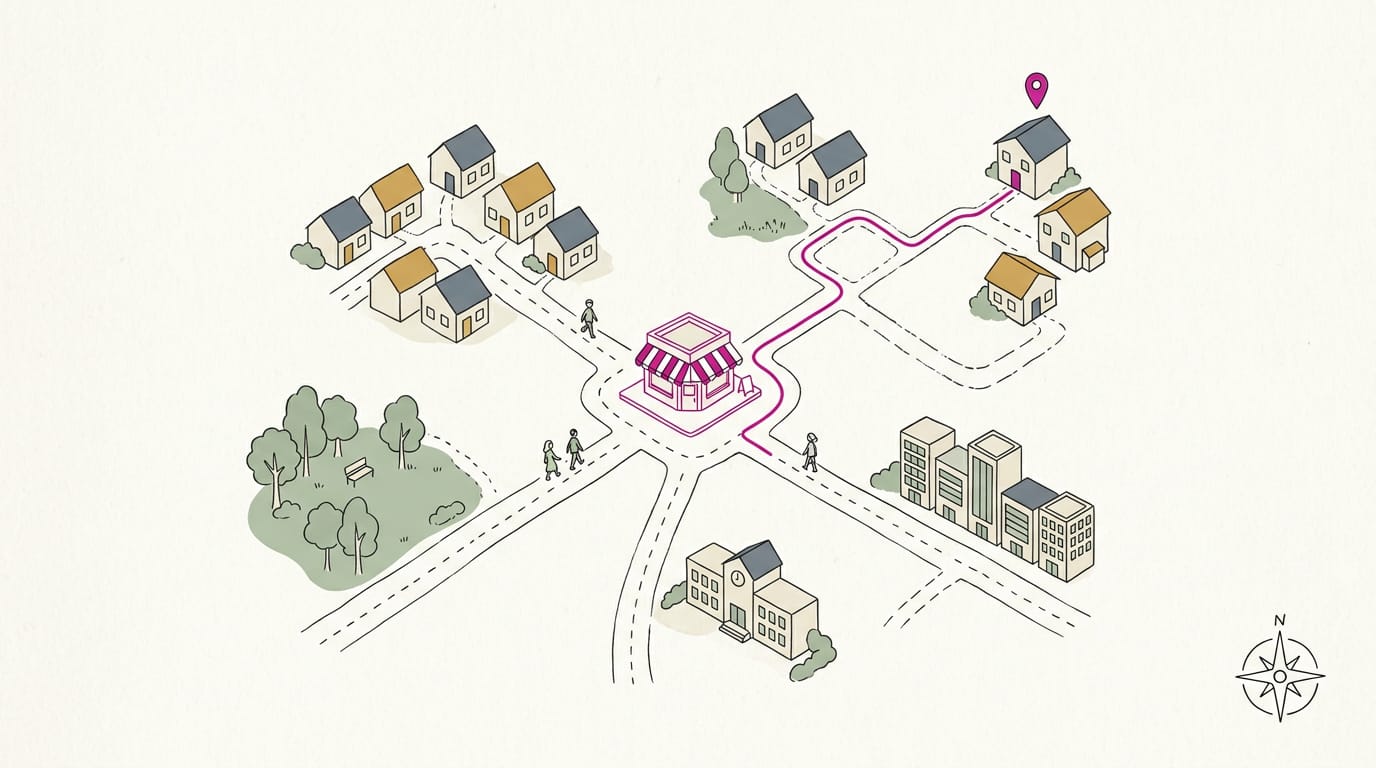
A marketing strategy for a small business is a practical plan for who you want to reach, what action you want customers to take, and which channels can bring them in. Set measurable goals, understand your best customers, explain why they should choose you, and focus your time and budget on channels that produce calls or bookings. Start with a complete map listing, genuine reviews, and a clear, mobile-friendly website, then add other tactics and adjust based on results.
Think about the last time you picked a shop you’d never tried. You probably checked the sign, the reviews, and the hours before you walked in. Customers do the same with your business.
A marketing strategy is your plan for who you want to reach, what you want them to do, and which few channels will get them to call or book.
This post walks through the whole plan, then shows you what to do first: a solid map listing, real reviews, and a fast, plain website before social media or ads.
Why Marketing Strategy for Small Business Matters
Many owners market in bursts, but a marketing strategy ties those efforts together so each one brings in calls.
A plan for reaching your customers
Start with one question: who needs what you sell, and how do they find you? A marketing plan answers that in writing, so you’re not guessing.
Consider a family plumbing company. Its owner knows emergency calls often start with a late-night search, so her plan puts her business in those searches, and the calls follow.
A solid plan uses multiple channels, the places customers meet you, like search, a map listing, or word of mouth. Relying on one leaves you exposed.
Your plan also needs positioning, the reason someone picks you over the next option. Make it clear why you’re the choice, not just that you exist.
No one-size-fits-all approach works. A salon and a food truck reach people differently, so build around your own customers.
How marketing levels the playing field
Big chains have bigger budgets, but good marketing gives you a fair shot. Here’s how:
- Brand awareness. People know your name before they need you. A neighbor who sees your van weekly will think of you when the water heater fails.
- New customers. Marketing puts you in front of people who’ve never heard of you, like a family that just moved across town and needs a dentist.
- Competing with larger firms. Big firms have more reach, but few can match a real person who answers the phone. That’s hard to copy.
- Limited budgets. You don’t need a huge spend to start. It’s less about how much you spend and more about who you reach.
Lay the Groundwork Before You Market
Before you pick a platform, get clear on your goals, your customers, your edge, and your budget. Each one shapes the next.
Set goals you can actually measure
Start with business goals, not marketing goals. Ask yourself, “What should this business do more of this year?”
Turn each one into a SMART objective: Specific, Measurable, Achievable, Relevant, and Time-bound. “Get more bookings” fails that test. “Add ten bookings a month by August” passes it.
Then set key performance indicators (KPIs), the few numbers that show you’re on track, like weekly calls or booking requests. Track results rather than effort.
Revisit goals regularly. A goal that made sense in January may need adjusting by June.
Know exactly who you are selling to
Narrow your audience. “Everyone in town” isn’t an audience, so pick the group you serve best.
Build a buyer persona, a short profile of a typical customer: their job, their problem, and the question they ask before calling. Demographics, like age and location, tell you who they are. Behaviors, like how they search, tell you how they choose.
Know where they spend time. A plumber whose customers are mostly homeowners might ask recent callers how they found him. If most say they searched on their phone, that’s where the effort goes first.
Find your edge and tell your story
Your brand story is the plain reason your business exists, what you stand for, and what you promise every customer. Your unique selling proposition (USP) is the one thing you do better or differently, in a sentence you can say at the counter.
The StoryBrand framework casts your customer as the hero and your business as the guide. Tell customers what you do for them, not just what you do.
Keep your logo readable on a van decal, and keep your tone the same on the phone and online. Clear beats clever.
Study rivals and find your opening
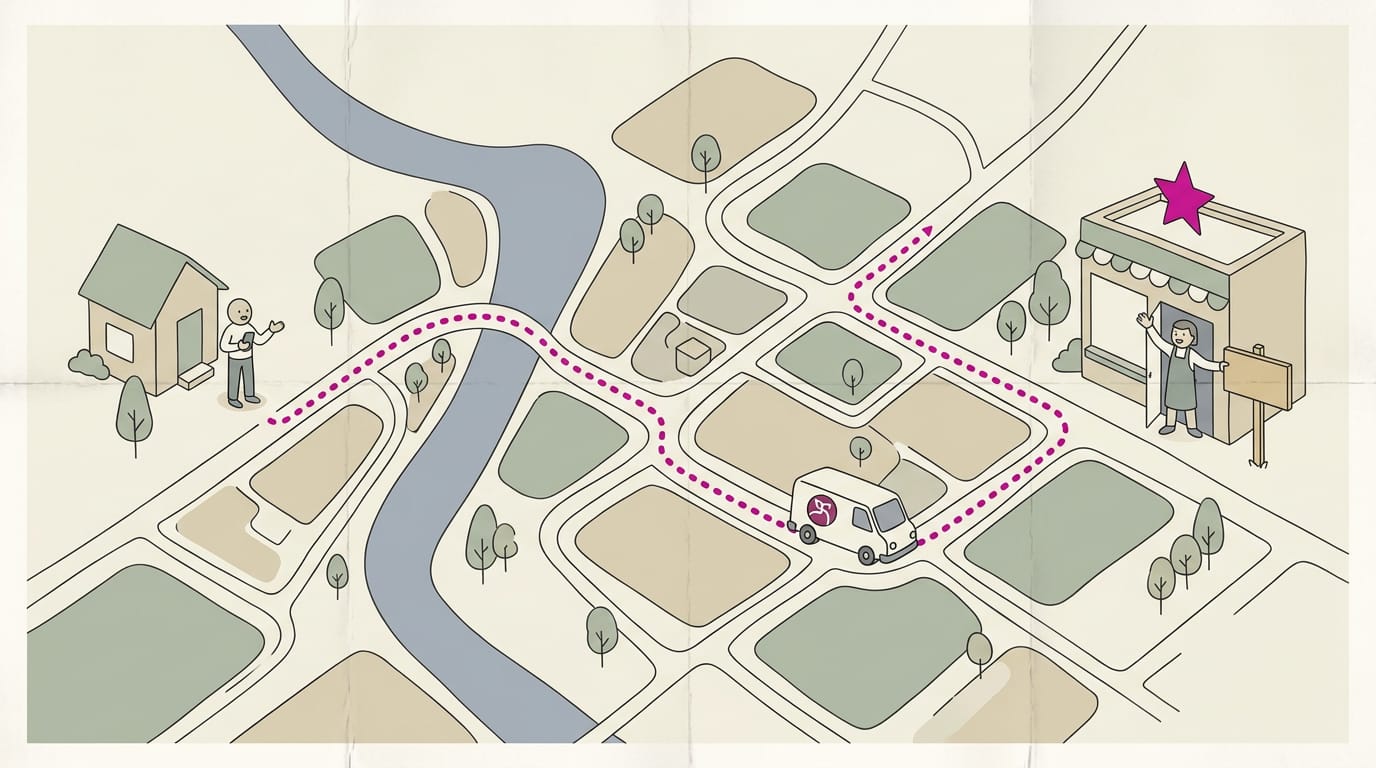
Look at the three or four businesses that show up when your customers search. Note their tactics, what they promise, and what they never mention.
The goal isn’t to copy them. It’s to find differentiation opportunities, the gaps where you can be clearly better or different.
For example, a dentist who notices nearby practices burying their hours deep in the website can move them to the homepage. That gives people who need help today a reason to call.
Set a budget and cut weak tactics
Set your marketing budget before you pick tactics, then spend it where it’s most likely to bring calls and bookings.
Count both direct costs (ads, software, flyers) and indirect costs (your time on posts, reviews, and listings).
Audit time and spend by listing each tactic’s monthly hours and cost. Rank them by effort and return, then cut low-return tactics. The weekly post that eats hours and brings no calls goes first.
Online Channels Worth Your Time
Not every channel deserves your time. Start with the two places customers check before they call: your website and your map listing.
Your website is your online front door
Your website is where people land after they search or spot your map listing. It’s your shop’s front door online. Keep it clear, modern, and mobile-friendly, since many visitors will be on a phone.
Add a contact form or booking button on every page for lead capture (collecting names and numbers), and consider live chat, where visitors ask a question and get a quick reply.
Build on WordPress, a popular website platform, if you’ll update it yourself, or hire a designer if you won’t. A clear site beats a clever one.
Get found in search and on maps
Search engine optimization (SEO) means making your pages easy for search engines to understand. Start with keywords, the words customers type, like dentist near me, and use them naturally in your titles and headings.
Backlinks are links from other websites to yours, like a supplier’s page, and SEO tools show which search terms people use.
Your Google Business Profile is the listing that shows on Google Maps, so finish it first:
- Claim and verify your listing.
- Match your name, address, and phone number everywhere online.
- Fill in your hours, services, and photos.
- Ask happy customers for reviews, since each one tells the next person you’re worth a call.
Make it complete, not just pretty. A landscaper who lists service areas and shows finished yards gives a homeowner searching nearby a clear answer.
Publish helpful content and video
Blogging builds authority, meaning people trust you as the expert. Answer the questions you hear at the counter, like how long a deep clean takes. A helpful post beats a frequent one that says nothing.
Short videos can show a repair faster than paragraphs of text, and you can post them on YouTube, a widely used video site. Podcasts, guides, and infographics work too, as long as you’ll keep them up.
Choose the right social platforms
Choose platforms by audience: pick where your customers spend time, not where the trend is loudest. Content pillars are the three or four themes your posts return to, plus a simple content calendar to keep them flowing.
Each platform rewards its own style, so a photo suits one and a short clip suits another. Reply to comments and messages within a day, since a reply is often a customer’s first real conversation. Two platforms done well beat five you’ve abandoned.
Build an email list people value
Build your list from people who’ve already shown interest, then segment it into groups, like repeat customers or people who asked about one service.
Send value-based emails with a real reason to open, like a dental office’s reminder that a cleaning is due. A small incentive, such as a discount on the next visit, can nudge sign-ups.
To avoid spamming, email only people who opted in, and make unsubscribing easy. Fewer readers who want your emails beat a bigger list that tunes you out.
Make paid ads pay off
Pay-per-click (PPC) ads appear in search results, and you pay each time someone clicks. Social ads are paid posts on social platforms. Start small: test one ad on a modest budget and count the calls and bookings it brings in, not the clicks.
Match spending to your budget, and keep the ad running long enough to learn from. Pair PPC with content: send clicks to a page that answers the question, like a plumber’s emergency page with a phone number up top. Ads amplify what’s already there.
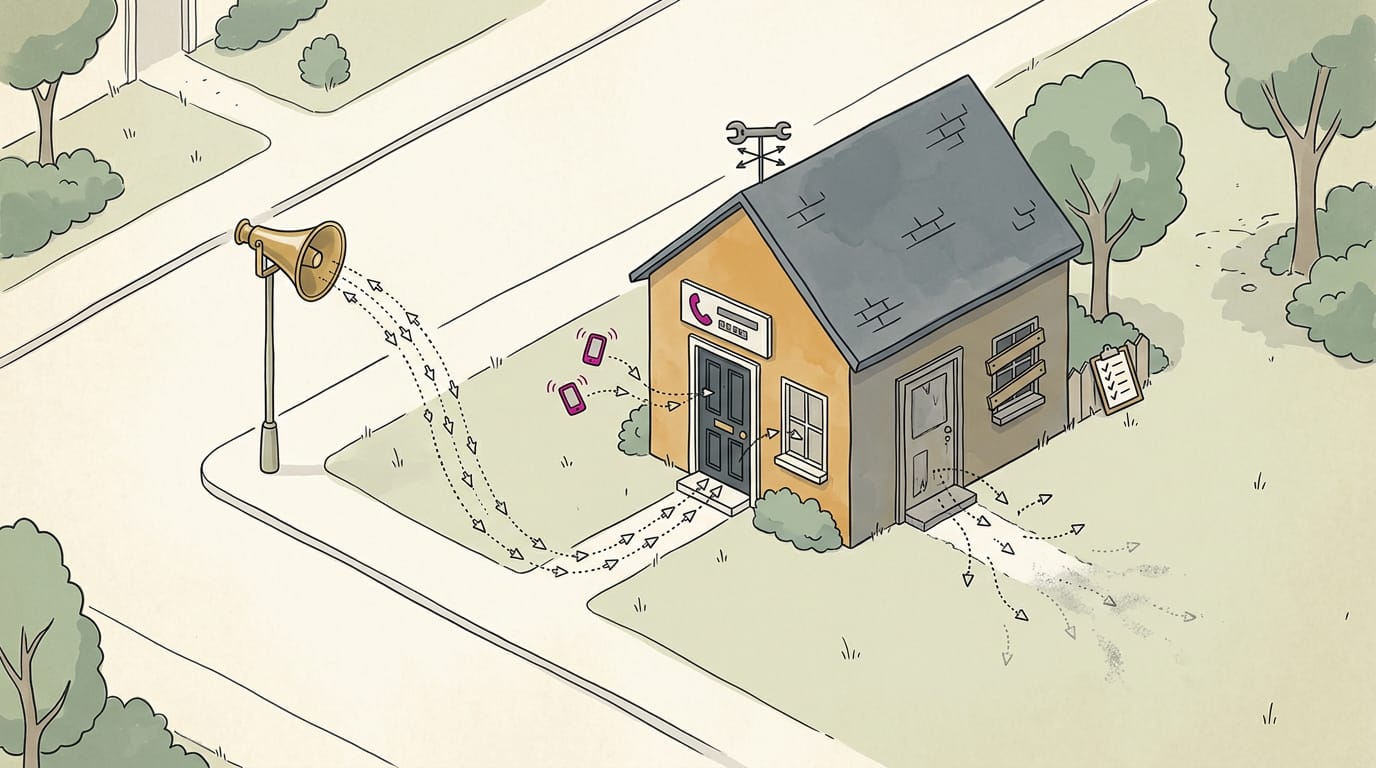
Connect Offline and Build Relationships
Plenty of local business starts with a neighbor’s recommendation. These tactics help people find you in person and give them a reason to call.
Flyers, mailers and bold street stunts
Flyers and brochures work best when they’re short: your name, what you do, your number, and one reason to call. A direct mail campaign sends a postcard to nearby households, like a dental office offering a new-patient checkup.
The goal is to reach the right neighbors, not the most neighbors. A guerrilla stunt is an unexpected, low-cost move in public, like a food truck handing out lunch samples. Surprise gets attention, but your name has to come with it.
Team up with local groups and partners
Local business groups, meetups, and trade associations put you in a room with owners who can refer work your way.
A cross-promotion partnership is a deal where two businesses that serve the same customers recommend each other, like a florist and a wedding photographer. Community involvement counts too.
A plumber who sponsors the youth soccer team gets his name in front of every family on the sideline, and when a pipe bursts, that’s the name they remember.
Speak, get press coverage and win awards
Speaking at a local club or industry event builds trust fast. An accountant who explains tax deadlines to a small business group finds attendees calling her first when a deadline nears.
Earned media is coverage you didn’t pay for, like a story in the local newspaper. A press release is a one-page news announcement for local reporters, leading with something new.
Award entries give you something to display and a reason to write down what you do best.
Earn reviews, referrals and word of mouth
Asking for reviews is less about pressure and more about convenience. Request one through your map listing right after each job.
Think of a heating and cooling technician who texts a review link as soon as the system runs again, and the customer can leave a review in seconds.
Showcase your best testimonials on your website with permission, and ask for referrals by handing happy customers a card to pass along. None of it works without excellent customer service. Show up on time, explain the bill, and keep your promises.
Service is the reason people talk, not a nice extra.
Follow up and keep customers coming back
A lead is anyone who has shown interest, like a call or a quote request. Follow up quickly. A roofer who gave an estimate can send a short text a few days later, and the homeowner who wasn’t ready yet will know exactly who to call.
A loyalty program rewards repeat visits. A coffee shop’s punch card, with a free drink when it fills, is a simple example. A short sales call to a warm lead, someone who already knows you, is easier than cold outreach.
The goal is staying in touch, not selling harder.
What is influencer marketing and customer content?
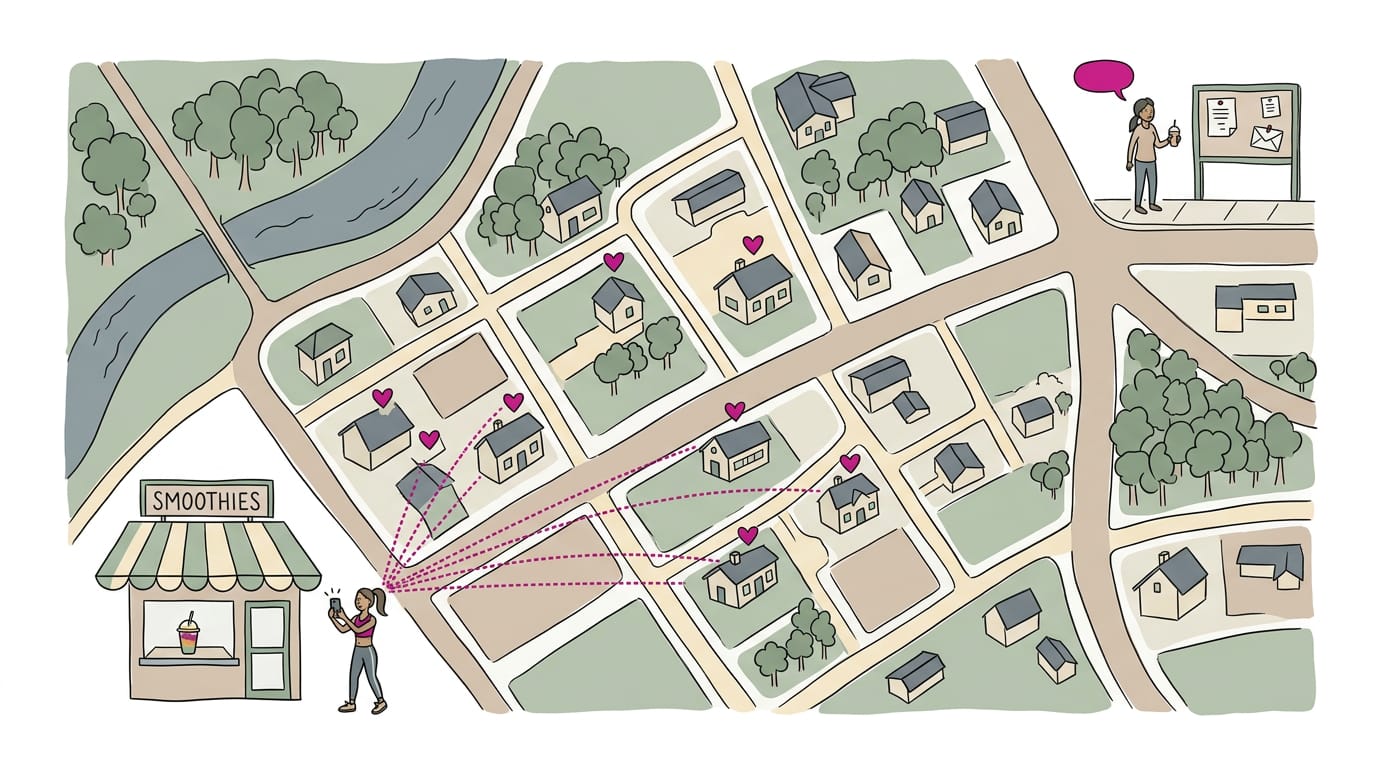
Influencer marketing means working with a person whose audience trusts their recommendations, so they share your business with that audience. It can be paid or a simple trade. Micro-influencers have smaller, local followings.
A fitness coach who shares a photo of your smoothie bar reaches people who live close by. Customer-created content is anything customers make about you, like photos or posts. Ask for it, and thank people when they share.
Balance Quick Wins with Long-term Growth
Quick wins pay this month’s bills, but they can’t carry your business alone. Here’s how to split your effort.
Plan across three time frames
Each time frame does a different job:
- Short-term brings quick cash. A sales call or offer can fill a slow Tuesday.
- Medium-term builds relationships. Repeat visits and referrals grow from the contact you keep making.
- Long-term compounds over time. Trust and search visibility keep working after a campaign ends.
The 3-3-3 rule in marketing is a handy balancing check. It keeps all three horizons in view, not just the one that feels most urgent this week.
Picture a salon owner who runs a two-day discount to fill a slow Tuesday. She also collects client phone numbers for a monthly rebooking text, and her updated map listing helps new clients find her later.
The discount fills the calendar, the texts bring back regulars, and the listing keeps working.
The trap is short-term-only thinking. If every dollar goes into this week’s promotion, you’re back at zero next month. That’s the fear zone. The goal is less about picking one horizon and more about balancing all three.
What to do in each time frame
Match each horizon to the right work:
- Short-term: offers, ads, and sales calls, used to fill gaps on the calendar.
- Medium-term: content, list building, and public relations (PR), which keep people coming back and your name in the community.
- Long-term: search engine optimization (SEO), brand, and proposition development. Your proposition is the specific reason customers choose you.
Notice where your map listing and reviews fit. They’re long-term assets, so starting them now pays off later.
Habits That Make Your Marketing Work
Good marketing is less about one brilliant idea and more about steady effort.
Stay consistent, clear and high quality
Pick a posting schedule you can keep, even if it’s only twice a month. A few strong posts beat daily filler. Picture a bakery owner who posts the day’s specials every Monday, with pickup hours. Regulars start to expect it.
Say what you do and where. “Emergency plumbing across the east side” says more than “We’re here for all your home needs.” Clear beats clever.
Keep your details current, starting with:
- Hours and holiday hours
- Phone number and address
- Services and prices
Outdated details send people to a locked door.
Track results and adjust what works
Start with analytics, the numbers your website and listings already collect. Add conversion tracking to count actions like calls and bookings.
Customer acquisition cost is your marketing spend divided by the new customers it brought in. If that number climbs while calls stay flat, something needs to change.
Platform engagement metrics, such as likes, show interest. But bookings matter more than likes.
Data-driven adjustments mean letting the numbers pick your next move. Review them monthly and change one thing at a time.
Hand off tasks and automate the rest
Delegate time-consuming tasks, like having a front-desk team member update your hours. When you’re stretched thin, hire experts or agencies, and ask how they’ll report results.
Marketing automation software sends scheduled posts and review requests on its own. It saves time, but it can’t fix unclear messaging.
Wondering how to scale your small business? Scaling means more customers without more hours. Start by writing down the steps you repeat, handing off whatever doesn’t need you, and only then adding new channels.
Check in often and test new ideas
Put a check-in on the calendar, weekly for a busy shop or monthly for a slower one. Ask what brought in calls, what didn’t, and what to try next.
Test what sticks by trying one new idea at a time, like a seasonal offer, and giving it long enough to judge. Drop what doesn’t work.
Mix online and offline, too. A restaurant manager puts her map listing link on a card in every takeout bag and asks new diners how they heard about the place. Those answers show what’s working.
A good marketing strategy doesn’t have to be complicated. Start with clear goals and a firm grip on who your customers are, then choose the channels that fit your time and budget.
Get your map listing, reviews, and website in order first, since those are what turn a search into a call. Social media and ads can come later, once that foundation is working.
Build the foundation, and every channel you add after that will work harder for you.
Questions
What is the 3-3-3 rule in marketing?
The 3-3-3 rule in marketing is a way to balance short-, medium-, and long-term marketing efforts. Use quick offers, ads, or sales calls for immediate results; content, email, and referrals to build relationships; and SEO, brand-building, and a clear value proposition for lasting growth.
What is influencer marketing?
Influencer marketing is working with someone whose audience trusts their recommendations to introduce your business to that audience. It may involve payment or a simple exchange, and local micro-influencers can help reach nearby customers.
What is the #1 reason small businesses fail?
A common leading reason small businesses fail is running out of cash, often because revenue, costs, and cash flow are not managed well. Weak demand or ineffective marketing can contribute, so businesses should track finances and make sure there are customers willing to pay for their offer.
What are some effective marketing strategies for businesses?
Effective strategies include completing your business map listing, collecting genuine customer reviews, and maintaining a clear, mobile-friendly website. Other options include SEO, useful content, email, targeted ads, social media chosen for your audience, partnerships, referrals, and follow-up with leads; track calls and bookings to see what works.
What are the 7 steps of marketing strategy?
A practical seven-step marketing strategy is to set measurable goals, identify your target customers, define your positioning and value proposition, research competitors, set a budget, choose suitable channels and tactics, and measure results so you can adjust. These steps connect business goals with the customers and channels most likely to produce results.
What are the three basic business strategies?
The three basic competitive business strategies are cost leadership, differentiation, and focus. A business can compete by offering lower costs, providing something distinct that customers value, or concentrating on a specific customer group or market niche.
How do I scale my small business?
Scale a small business by increasing customers without adding the same amount of owner time. Document repeatable tasks, delegate or automate work that does not require you, and track the results before expanding into new channels or adding more demand. Ensure your processes and customer service can handle growth.