Online Reputation Management Explained, Step by Step
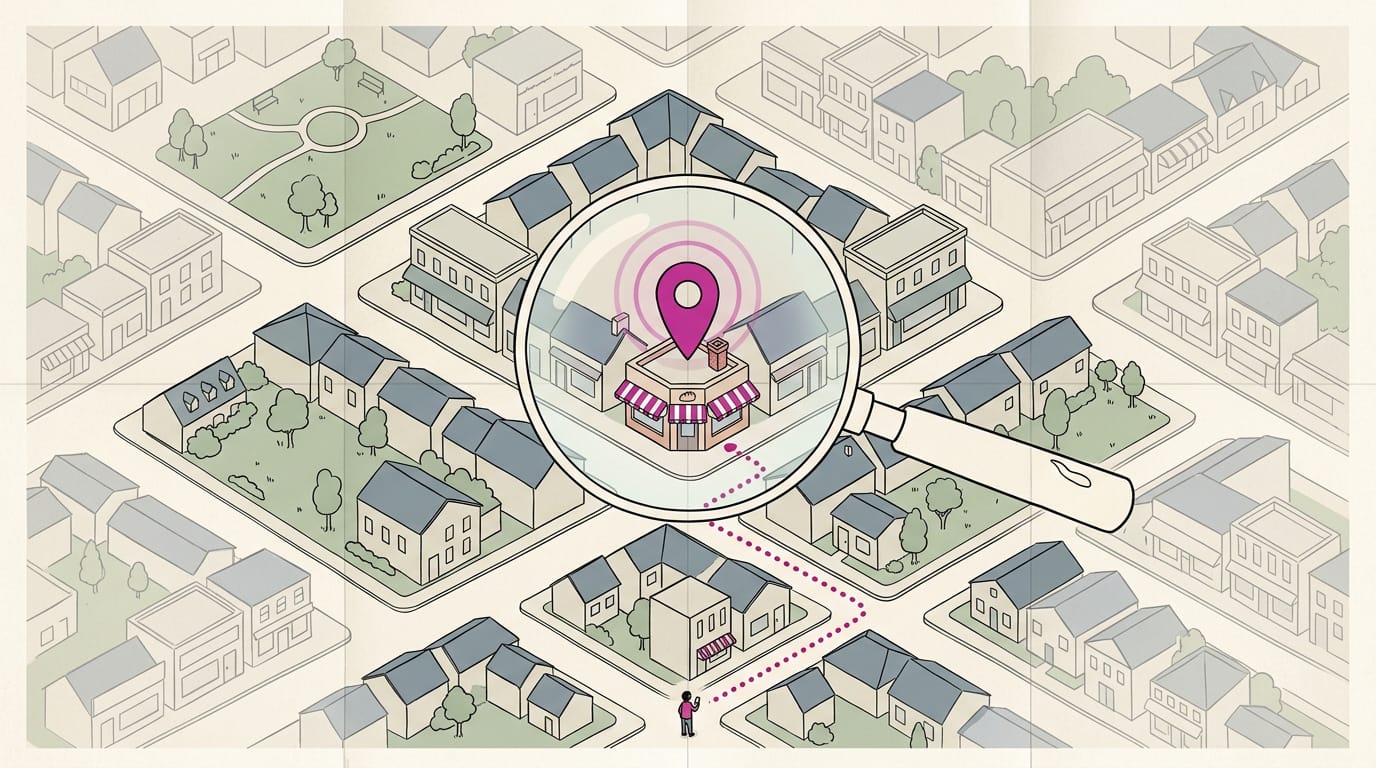
Online reputation management helps you monitor reviews, respond to feedback, and use SEO and content to make positive stories easier to find.

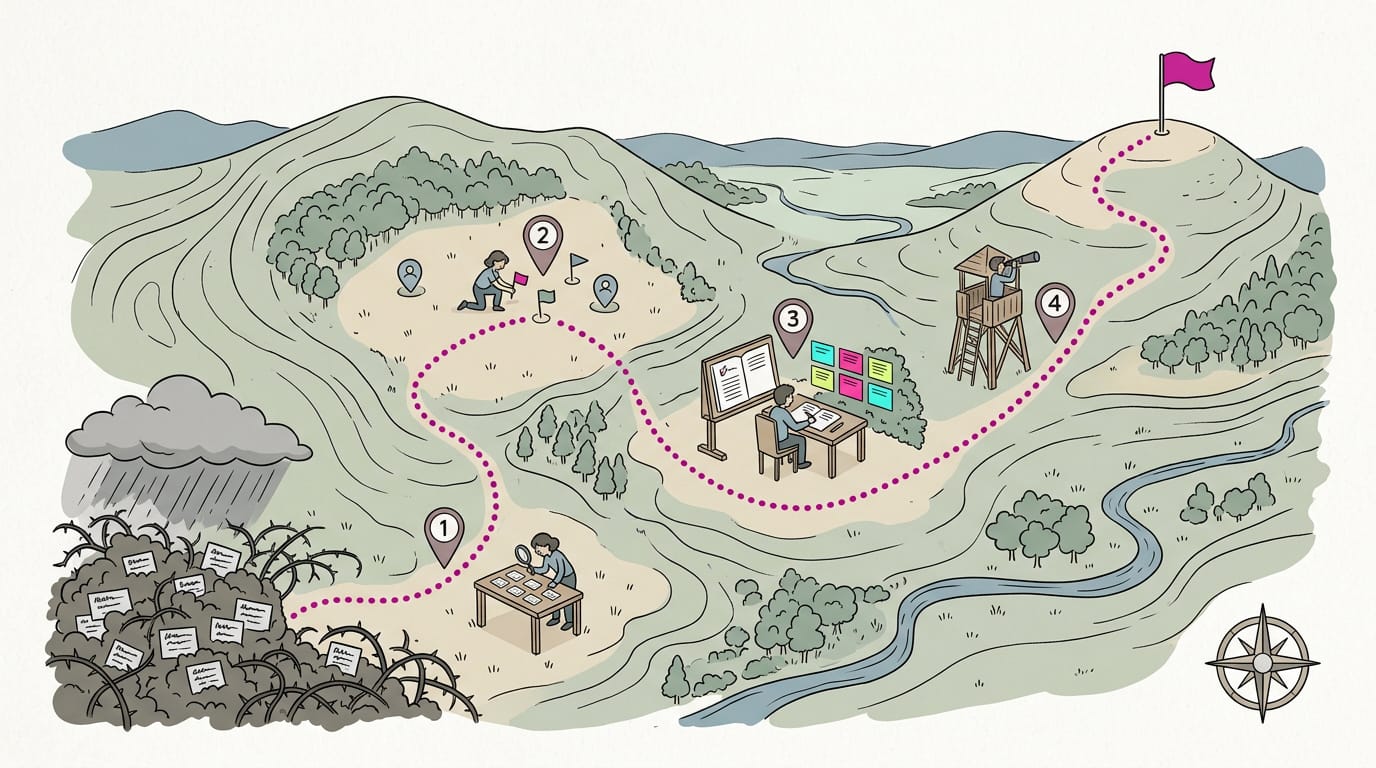
Online reputation management is the ongoing work of monitoring what people find and say about a business, responding to feedback, and shaping its public image across reviews, social media, and search results. It combines proactive habits, such as asking customers for honest reviews and keeping listings accurate, with calm, timely responses to complaints and false or unwanted content. A consistent routine helps customers see a trustworthy, up-to-date picture and gives businesses a chance to address problems before they grow.
Think about the last time you picked a plumber from a search. You skimmed the star ratings, read a comment or two, and made up your mind in under a minute. That quick impression is your reputation, and it’s working for you or against you every day.
Online reputation management is the ongoing work of watching what people say about your business, responding to it, and making sure the good stories are easy to find.
For a local business, that work starts close to home, with your map listing and your reviews. Here, we’ll cover what it really means and a simple local routine to keep it strong.
What Online Reputation Management Really Means
Ever wondered what someone finds when they search your name before calling?
Goals of monitoring and shaping perception
Online reputation management (ORM) means watching what people say about your business and shaping that picture over time. You monitor, influence, and maintain perception across reviews, social media, and search results.
Perfection isn’t the target. An accurate picture is, and honest replies build the trust and credibility that get the phone ringing.
How ORM and PR differ in practice
Public relations (PR) is proactive and external, aimed at the public through announcements and outreach. ORM is more internal and reactive, usually handled by your own team in response to something a customer posted.
Both share the goal of a trustworthy reputation, but they get there with different methods. Corporate reputation, a company’s overall standing, is typically a PR job.
For a single-location business, though, the big picture and the daily reviews blur into one job.
Getting ahead versus reacting to problems
The best work happens before trouble shows up, but you’ll still react when it does. Here’s how the two split:
- Proactive: asking happy customers for reviews, posting useful content, and replying to every review.
- Reactive: requesting removal of false reviews or burying unwanted content in search results.
Consider a plumber who replies to every review, good or bad. When one one-star review lands, those replies show customers how problems get handled.
You need both: proactive habits build good signals so one bad moment doesn’t dominate, and reactive steps handle what’s false or unwanted.
Old-school silencing tries to hide what’s out there. Relationship building gives people more good reasons to find you. It takes patience, but it lasts.
Why Online Reputation Management Matters
Your online reputation is what people see before they ever call: your reviews, your ratings, and what turns up when they search.
How reputation drives sales and buyer choices
Reviews shape buying decisions. New research from the University of Denver’s Daniels College of Business finds that reviewers’ credibility and how reviews are structured significantly affect buying decisions.
Reputation also affects revenue and conversions. A 2015 study by Engler et al. found that star ratings and the positivity of written reviews have a positive effect on sales, satisfaction, and loyalty.
Negative reviews deter buyers, and they shape who finds you at all. Picture a bakery owner whose newest review, a complaint about a late cake, sits at the top of her page. A customer hunting for a birthday order books the bakery down the street instead.
Catching problems before they become crises
Read your reviews every week and watch for:
- Repeated complaints about one issue.
- Sudden dips in your average rating.
- Repeat questions your listing should answer.
A small problem left alone can escalate into a crisis, so catch it early. When you reply quickly and calmly, you control the narrative instead of letting one angry post set it. A sincere reply that offers to fix the problem often stops the story there.
Why being open keeps customers loyal
Customers value openness, and owning a mistake in public builds trust. Being open isn’t about never making mistakes; it’s about how you handle them. Consider a restaurant manager who replies to a review about a cold plate with: ‘Thanks for telling us.
We’re fixing how that plate got to you cold, and we’d love to make it right.’ The next guest reading that knows someone is listening. Customers who feel heard come back and send friends your way. That’s loyalty you didn’t have to buy.
Wider gains for growth, hiring and investors
Good reputations tend to snowball: happy customers leave reviews, and those reviews bring in new customers. Investors and partners often look you up online before they talk money.
Reviews are also free market research, showing what customers love and what frustrates them. Job seekers read reviews too, so a strong reputation helps you attract good people. Small businesses have less cushion when reputation slips.
Forsey (2023) notes that limited resources make managing their online reputations more pressing.
Where Your Reputation Takes Shape
You don’t build your reputation on your website alone. It forms on social media, review sites, news and forums, and in search results.
What customers say on social media
Social platforms work as a search engine of their own, and customer commentary can help or hurt. A glowing comment and a harsh complaint can sit side by side, so your reputation is shaped more by what customers say than by what you post.
Conversations happen in real time, so reply quickly, and keep your platform presence current.

Which review site is most trustworthy?
Your star rating follows your brand, appearing beside your name on Google, Yelp and Facebook.
A meta-analysis on how online reviews affect purchase intention points to proof of their influence, and Harvard Business Review research reports that as many as 98% of consumers say they rely on reviews to inform purchase decisions.
Many people trust reviews nearly as much as a friend’s recommendation.
The research we have doesn’t crown one most trustworthy site, so the answer is the platform your customers check first.
For a local business, start with your Google Business Profile, the listing that shows your hours and reviews when someone searches nearby. Claim it and complete every field you can. Think of a dog groomer whose listing still shows last winter’s hours.
A customer drives over to a locked door and books somewhere else.
How news, blogs and forums shape views
Online news gets amplified, and stories stay searchable long after they run. Niche blogs carry authority, and Reddit and forums are often the most candid voices around. Negative coverage is the hardest to counter.
A bad review gives you a reply box, but a critical article usually doesn’t. The question is less about whether a story exists and more about how you respond: calmly, with facts you can back up.
Why influencer recommendations carry weight
An influencer endorsement works much like media coverage, and it’s a way to expand into new audiences.
A Digital Marketing Institute post on influencer statistics notes that brands find it extremely difficult to build the trust influencers already have, but that trust can be passed to your brand. Think of a salon that partners with a local stylist.
When her followers see her post about a new service, they already feel they know the salon.
What people see when searching your brand
When someone types your business name, they see branded search results: your listing, your website, reviews and any mentions.
A study on how ranking affects user choice in online search, published in Review of Industrial Organization, found that being at the top of algorithmic search results has a large, statistically significant effect on whether someone clicks.
Moving from rank 1 to rank 2 on the same page cut the odds of a click by between one third and two thirds.
Search your own name now and then and watch for two things:
- The top result: make sure it’s a listing you’re proud to have people click.
- Paid ads: competitors can bid on your brand terms, so a rival’s ad may appear when someone types your name.
Your name is already being searched, so make sure the first thing people find is worth the click.
Keep Watch on What People Say
Your reputation gets discussed whether you’re listening or not, so we’ll show you how to hear it early.
Get alerted whenever your brand is mentioned
Start with brand alerts, automatic notifications that fire when your name appears online. Add common misspellings too.
Alerts are a start, so also check local social media, blogs, and forums. A dental office might spot a forum complaint the same afternoon, reply politely, and invite the patient to call.
Checking regularly beats checking only in a crisis. Here’s a simple weekly routine:
- Scan alerts plus your key forums and social pages.
- Mark each mention as positive, mixed, or negative.
- Reply to anything that needs an answer that week.
Route every mention into one central inbox, a shared list showing who’s handling each one and whether it’s resolved.
Gauge sentiment across industry conversations
Your reputation also lives in the wider talk about your trade. When neighbors ask who handles emergency repairs, you learn what customers value.
Sentiment analysis means sorting comments by tone: positive, mixed, or negative. You can skim a weekly sample by hand or use a tool.
Look for patterns rather than single comments. If three customers mention slow callbacks in one month, that’s an insight about your phones.
Watch what people say about competitors too. A restaurant manager who sees several local posts praising a rival’s patio learns what diners want.
Audit your assets and find your audience
Run a brand audit, a quick inventory of what you control:
- website
- map listing
- social profiles
- printed menus
Check that name, address, phone, and hours match on each.
Then Google your business name in a private browser window and note any outdated listings or unanswered reviews.
Finally, identify the few channels your customers actually use and listen there first.
Using data to spot trends early
A customer experience (CX) dashboard puts your key numbers in one place:
- review count
- average rating
- reply time
- call volume
Predictive analytics uses past patterns to estimate what’s likely next. If wait-time complaints keep following busy weekends, add staff before the next one.
Weak signals are small early hints, like one question repeated across reviews. Reputation intelligence is the habit of gathering them and reading them together. Act on hints before they become headlines.
Replying to Customers and Their Feedback
Every review gets read twice: once by the person who wrote it, and again by every future customer. Your replies can win both readers.
Why quick, caring replies matter
According to a systematic review of managerial response strategies for online word of mouth, businesses should respond to feedback, especially negative feedback, in a personalized, detailed, and timely manner.
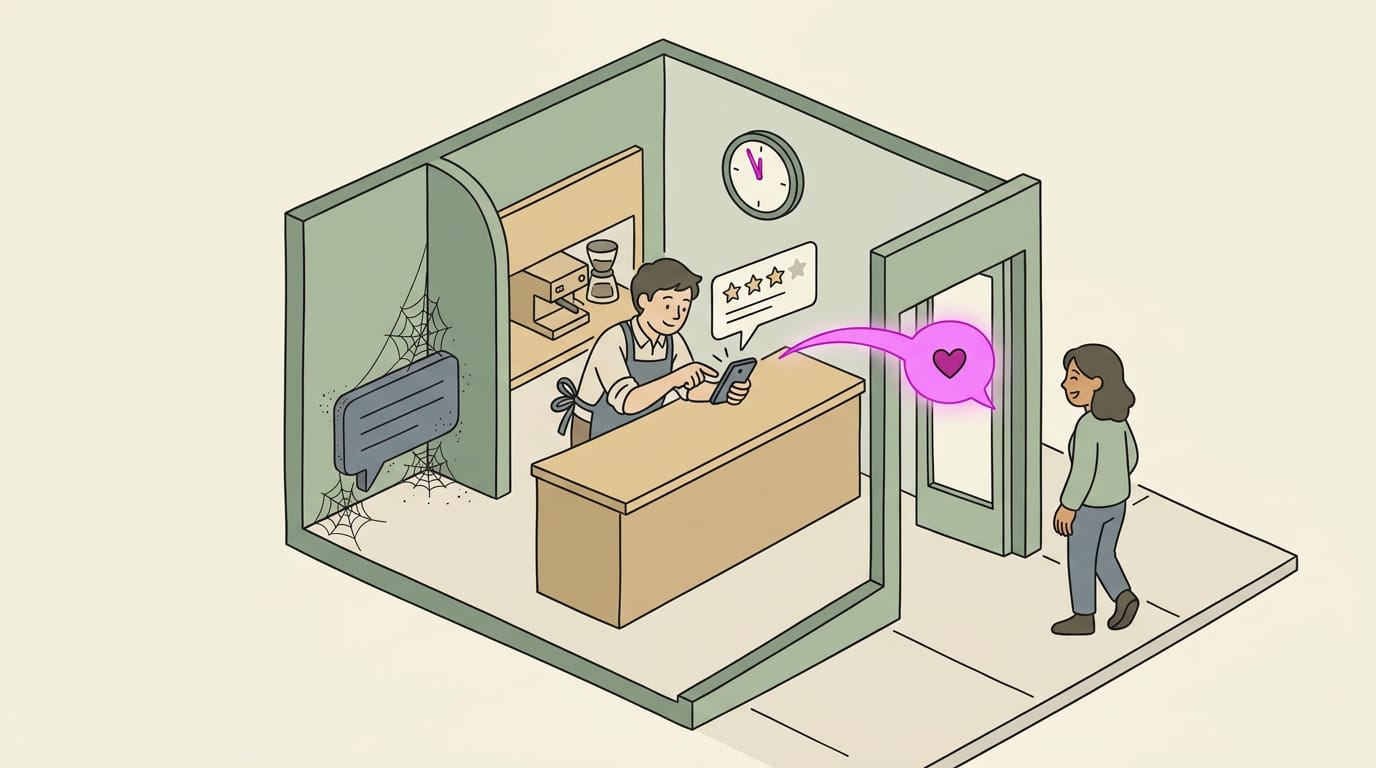
Aim to reply within 24 hours, because speed counts. Silence is easy to misread, since an unanswered review can look like you don’t care.
Lead with an empathetic tone: “We’re sorry the wait ran so long. That’s not the visit we want anyone to have.” Study how Zappos and Lululemon reply in public, then borrow what fits a shop your size.
Answer every negative review thoughtfully
Every negative review needs a reply, and here’s how to make each one count:
- Always reply to negatives. Skipping the tough ones looks like hiding.
- Offer workable solutions. Name a concrete next step, like a redo or a refund.
- Listen to valid complaints. If the reviewer has a point, say so and explain the change.
- Others read your responses. Future customers judge how you handle your worst day, not just your best.
If a review looks fake or unfair, stay just as calm, state the facts briefly, and report it through the platform if it breaks their rules.
Keep a few review response templates for praise, complaints, and mixed reviews, and tweak each one before posting so no reply reads as copy-paste.
Owning mistakes and apologizing well
When you get it wrong, own it. A strong public response does three things:
- Apologize sincerely. “We’re sorry the order was wrong, and that you had to come back for it.”
- Describe the fix steps. Say what you’ll do and what you’ve changed, not why it happened.
- Choose the right channel. Keep the public reply short, then move the details to a call or email.
Consider a plumber whose crew left a mess on a customer’s kitchen floor. He replies publicly with an apology and a free return visit, then calls to set a time. Everyone reading sees an owner who shows up.
Study how Starbucks, Pepsi, and United answered public missteps, and borrow the tone, not the scale.
Keep arguments out of public view
A public thread isn’t the place to win. Even when a reviewer has the facts wrong, a long debate rarely helps.
- No arguing online. One calm sentence correcting a fact is fine. A back-and-forth is not.
- Move the conversation offline. Invite them to call or email so the details stay private.
- Stay professional. Keep your tone steady, even when the review isn’t.
Asking happy customers for reviews
Don’t wait for reviews to show up. Ask past customers directly, and ask at the point of service, while the visit is still fresh.
- Send email and text requests. A short email or text message (SMS) with a direct review link is easy to act on.
- Accept mixed ratings. You don’t need perfect scores, and a few lower ones read as honest.
- Invite photo uploads. A photo of the finished job tells the next reader more than a star count.
Train your team on response rules
Even a small team answers the phone and reads the inbox, so write the rules on one page.
- Response protocols. Name who replies, the 24-hour target, and who signs off on refunds.
- Tone and escalation rules. Set a calm, plain tone, and list which complaints go straight to the owner.
- Employees as brand advocates. A front-desk team member who mentions the review link at checkout helps turn a good visit into a review.
How SEO Helps Protect Your Reputation
Search engine optimization (SEO) is about how your pages rank, while online reputation management (ORM) is about what people find. The main difference is scope: SEO is one tool ORM uses.
Pushing positive pages above negative ones
When someone searches your name, the first page they see shapes their impression. Your goal is to push positive pages above negative ones:
- Rank positive content higher. Keep your own pages current so they outrank anything unflattering.
- Claim third-party profiles. Claim the listings that already show your name, so you control the basics.
- Build backlinks to key pages. A backlink is a link from another site to yours. Earn them for your services or booking page.
- Use many sites for brand queries. A brand query is a search for your name. Consistent listings across many sites keep one bad page from owning those results.
Picture a dental office owner who finds an old complaint on page one of a search for her practice. She claims her profiles and keeps her site current, so new patients land on her pages first. Your pages should lead.
How reviews boost local search rankings
Reviews are a local search ranking factor. Search Engine Land’s guide to Google reviews and SEO calls them a prominence-based factor, meaning they signal how well-known and trusted you are. Reviews are your steadiest lever.
Your star rating is part of what searchers see, so steady reviews help them choose you. Local search expertise means showing you serve your area: name your town in your profile, site, and review replies.
Consider a plumber who replies to each review by name and mentions his neighborhood. Those town names match what people type into search.
Building Content That Tells a Good Story
Your reputation grows from the story you tell and the one customers tell for you. Here’s how to shape both without a marketing department.
Publishing your own and customer content
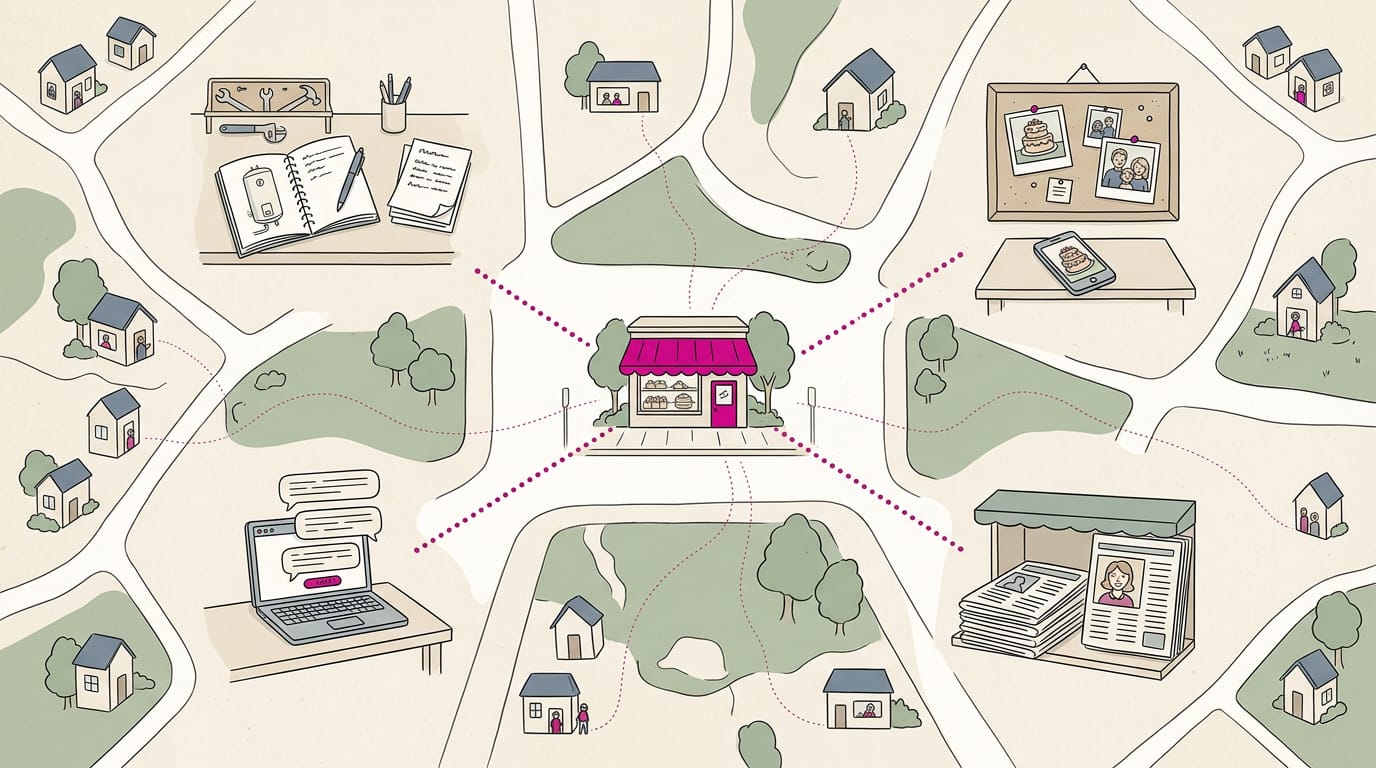
Blogging for thought leadership means sharing what you know, like a plumber explaining why water heaters fail early. It shows customers how you think before they ever call.
User-generated content is what customers post on their own. Ask for photos, then reshare the best ones.
Display testimonials by placing them on the pages people visit right before they call, such as your services page.
Guest posts and interviews borrow someone else’s audience. A bakery owner’s interview in the neighborhood paper can put her name in front of people who’ve never walked past her door.
Steering the story through PR and partners
Positive news coverage starts with a real story: a new location, a milestone, or a hire. Send the local paper a short, factual note.
Influencer partnerships depend on fit. It’s less about how many followers a local voice has and more about whether they live near your door.
Cross-channel communications from insights take what customers ask and carry it into every channel. If five people ask about Sunday hours, answer it on your map listing, your website, and your window.
Charity and events put your name where neighbors already gather. Sponsor a school fundraiser you care about, and each one gives you a photo and a story to share.
Letting staff and leaders carry your brand
Key staff social presence helps when your lead stylist or front-desk manager already has followers who trust them. Encourage posts they’re comfortable sharing.
Culture shapes service. Customers can tell when a team enjoys its work, and it shows at the counter and on the phone.
Executives tied to brand means the owner shows up in photos and at community events, so the business feels personal. Customers don’t book a logo. They book the person who answers the phone.
Tools That Make the Job Easier
Software can take the tedious parts of reputation work off your plate. The goal is to help you respond faster, not to replace your judgment.
What to look for in ORM software
Check these five traits in any online reputation management (ORM) tool:
- Collaborative workspace. Several people can claim and reply to mentions in one place.
- Scalability. It shouldn’t slow down when you add a location or a busier season.
- Channel integrations. It should connect to the sites where customers talk about you, like your Google Business Profile.
- Reporting capabilities. Simple charts of ratings and review volume over time show whether your efforts are working.
- AI and automation. Artificial intelligence (AI) can draft replies or flag urgent complaints, but a person should review them first.
Think of a dental office where the front desk and the office manager both see the same one-star review. A shared inbox lets one person claim it, so the patient gets one thoughtful reply that day instead of duplicate replies or none at all.
Popular tools you can start with
Pick the one or two tools that fill your biggest gap, and add more only when you’re ready. Start small.
- Google Alerts. A tool that emails you when your business name appears online.
- Brand24 sentiment. Tracks mentions and labels each as positive, negative, or neutral.
- SEMrush rank tracking. Shows where your website ranks for the search terms customers use.
- Customer experience (CX) platforms. Gather feedback from several channels into one view.
- Review management software. Pulls reviews from multiple sites into one dashboard so you can reply from one spot.
Agencies and Services Worth Considering
Wondering whether a pro should handle your reputation? Here’s how to compare them.
Top providers and who each suits best
Thrive, Sprout, Birdeye, Podium, NP Digital, NetReputation, and others are worth a look. Who a provider serves best matters more than how big it is.
Rather than trust any single ranking, build a scorecard: rate each provider 1 to 5 on the checklist below and on price.
Match the provider to your business type: a bakery that needs an hour of review replies a week doesn’t need a ten-location chain’s plan.
How to pick the right agency
Check each firm on five points:
- Proactive and reactive skills. Proactive work builds reviews and listings before trouble hits. Reactive work handles a crisis when it lands.
- Upfront plan and transparency. Get the monthly plan in writing, with clear reports.
- Consistent communication. Know your contact and how often you’ll hear back.
- Local search experience. Ask whether they’ve improved map listings for businesses like yours.
- Industry fit and track record. Ask for examples from your industry and a reference you can call.
Insist that your map listing and reviews come first.
Pricing, contracts and expected timelines
Monthly plans range from $30 to $5,000, so focus on what you’re buying, not just how much it costs. Expect real movement in 30 to 90 days. Not overnight.
According to BDJ In Practice, this work may be handled in-house or outsourced, and some providers offer no-contract or success-based arrangements, where you pay for results. In-house means your own staff do it; outsourcing hands it to a firm.
The sensible order is DIY first, then outsource. For example, a plumber who spends an hour a week on listings and reviews can tell within two months whether it’s working. If not, it’s time to get quotes.
Kinds of help agencies actually offer
Agency help falls into five areas:
- Content removal and suppression. Getting harmful pages removed or pushed lower in search results.
- Public relations (PR) crisis management. Responding calmly when a complaint starts to spread.
- Review solutions. Tools and routines for getting and answering reviews.
- Listings management. Keeping name, address, phone, and hours accurate everywhere.
- Wikipedia and autocomplete. Checking the search suggestions that appear as someone types your name, plus any Wikipedia entry.
Start with listings and reviews.
Online reputation management comes down to three habits: keeping watch on what people say, replying thoughtfully, and keeping your map listing accurate. You don’t need a marketing team, just a simple routine you’ll actually stick with.
Your reputation is built one review, one reply, and one accurate listing at a time, so small, steady moves beat a single big push.
Consistency is what turns a few good reviews into a reputation people trust.
References
- From Reviews to Revenue: Examining the Impact of Online Reputation Management on Small Business Performance — jsbs.scholasticahq.com (2026)
- How online reviews affect purchase intention: A meta-analysis across contextual and cultural factors — doi.org (2023)
- Managerial response strategies to eWOM: A framework and research agenda for webcare — doi.org (2023)
- Online Customer Reviews; How They Influence Purchase Decisions — daniels.du.edu
- How Does Ranking Affect User Choice in Online Search? | Review of Industrial Organization — link.springer.com (2014)
- Simple, fast and effective — nature.com (2020)
- Google Reviews & SEO: Advanced Strategies That Scale — searchengineland.com (2025)
- Research: What Consumers Find Persuasive in Online Reviews — hbr.org
- 20 Surprising Influencer Marketing Statistics — digitalmarketinginstitute.com
Questions
What is the most trustworthy review site?
There is no single review site that is most trustworthy for everyone. For a local business, start with Google because customers often check its listing and reviews when searching nearby, and compare feedback across platforms customers use.
What is the main difference between SEO and ORM?
SEO focuses on how your web pages rank in search results; ORM manages what people find and how they perceive your business across reviews, social media, and search. SEO is one tool that can support ORM.
How to manage your online reputation?
Manage your online reputation by regularly monitoring reviews and brand mentions, responding promptly and thoughtfully, and keeping your business listings accurate. Ask satisfied customers for honest reviews, address recurring problems, and use search optimization to make useful, accurate information easy to find.
Sources
- Online Customer Reviews; How They Influence Purchase Decisions, daniels.du.edu
- From Reviews to Revenue: Examining the Impact of Online Reputation Management on Small Business Performance | Published in Journal of Small Business Strategy, jsbs.scholasticahq.com,
- How online reviews affect purchase intention: A meta-analysis across contextual and cultural factors, doi.org,
- Research: What Consumers Find Persuasive in Online Reviews, hbr.org
- How Does Ranking Affect User Choice in Online Search? | Review of Industrial Organization | Springer Nature Link, link.springer.com,
- Managerial response strategies to eWOM: A framework and research agenda for webcare, doi.org,
- Simple, fast and effective | BDJ In Practice, nature.com,
- Google Reviews & SEO: Advanced Strategies That Scale, searchengineland.com,
- 20 Surprising Influencer Marketing Statistics | Digital Marketing Institute, digitalmarketinginstitute.com